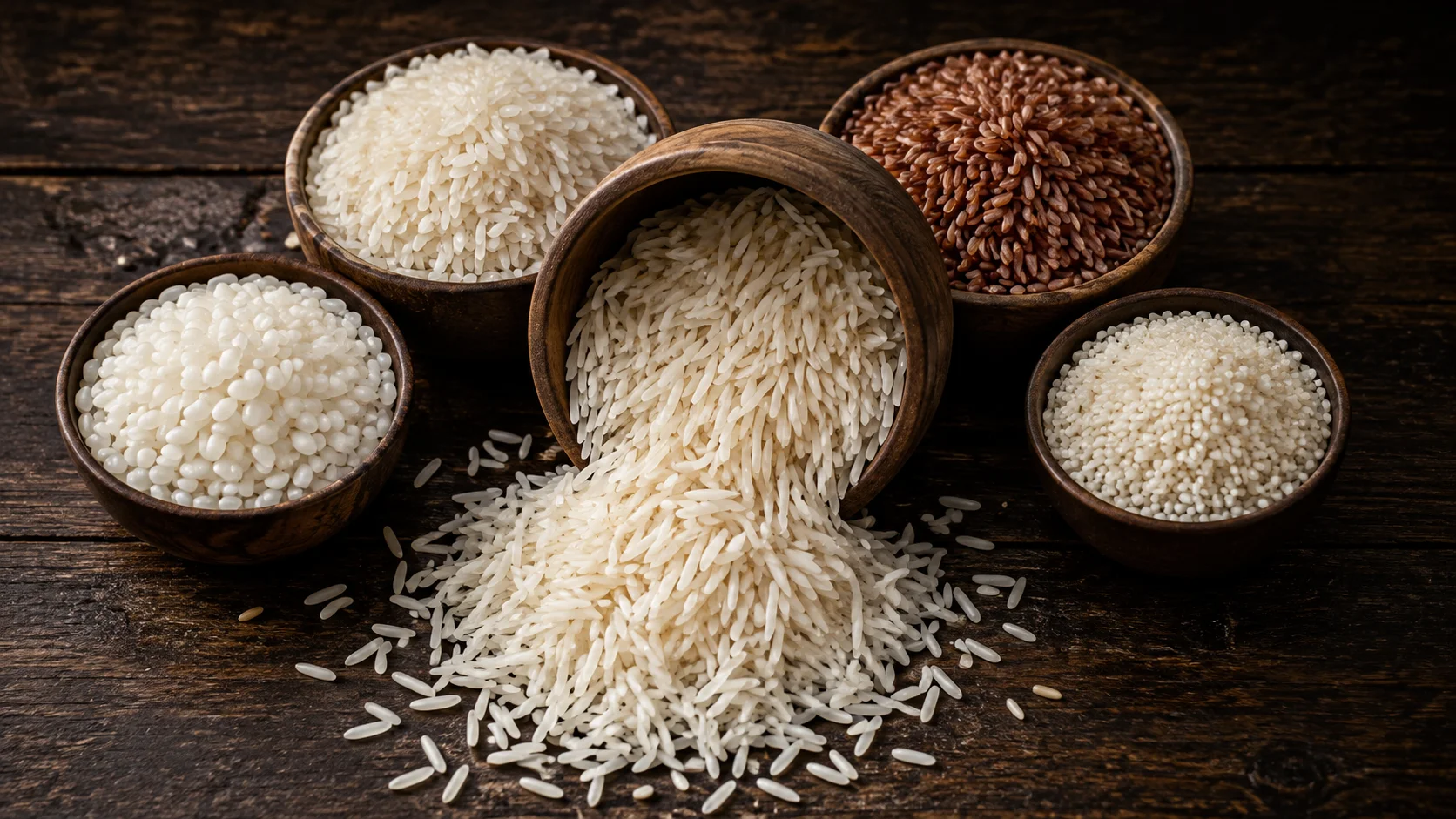
Rice for Indian Food: Which Rice to Use for Which Dish
 MasalaBear Team
Basmati for biryani, sona masoori for curd rice, matta for a Kerala meal. A practical guide to the rice Indian cooks actually use, dish by dish, and what to buy if you only keep one bag.
Tip
Walk into an Indian grocery and the rice aisle is a wall: 10-kilo sacks of basmati in six brands, sona masoori, ponni, matta, idli rice, gobindobhog, broken rice, and a few you have never heard of. Walk into a regular supermarket and you get one choice, basmati, next to jasmine. Neither situation tells you which one your dish actually needs.
The short version is that India does not have a single rice. It has regional rices, each matched to the food around it. This guide maps the dishes you are likely to cook to the rice Indian home cooks reach for, and tells you what to buy if you only want to keep one bag.
The Rice Indian Cooks Actually Use
Most of what you need to know fits in one table. The "everyday substitute" column is what to use when you cannot find the traditional grain.
| Dish | Traditional rice | Why | Everyday substitute |
|---|---|---|---|
| Biryani | Aged long-grain basmati | Grains elongate and stay separate through layering and steaming | Any basmati, soaked 30 min |
| Pulao and jeera rice | Basmati | Separate, fluffy grains that carry whole spices | Long-grain white rice |
| Plain rice with curry (North) | Basmati | Holds shape under gravy, nutty aroma | Jasmine, in a pinch |
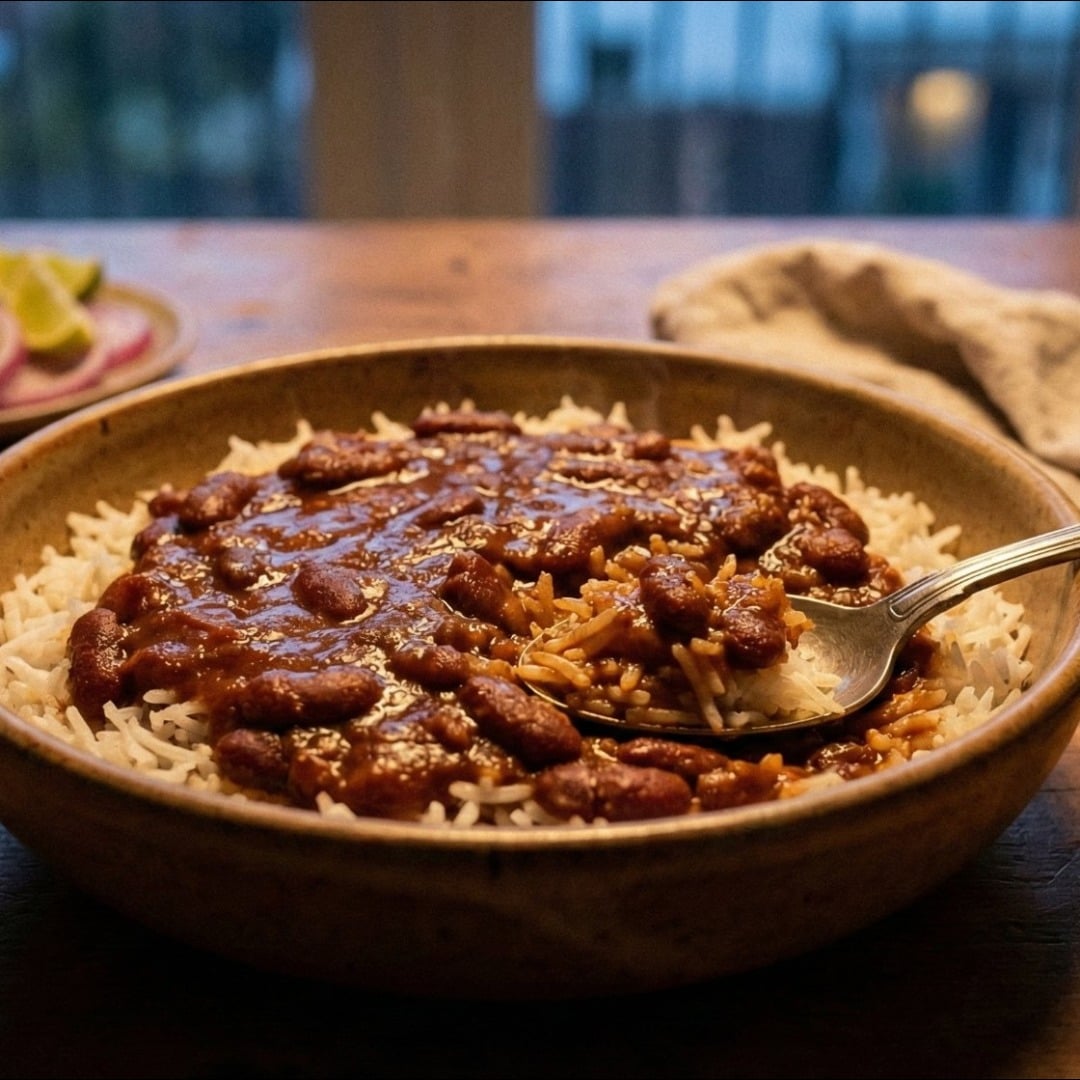
| Rajma chawal, dal chawal | Basmati or everyday long grain | Fluffy but not fussy; a weeknight rice | Jasmine |
| Sambar, rasam rice (South) | Sona masoori or ponni | Soft, absorbent medium grain that mixes well by hand | Calrose or any medium grain |
| Curd rice | Sona masoori or ponni, cooked soft | Needs to mash into yogurt; basmati stays too firm | Short-grain white rice |
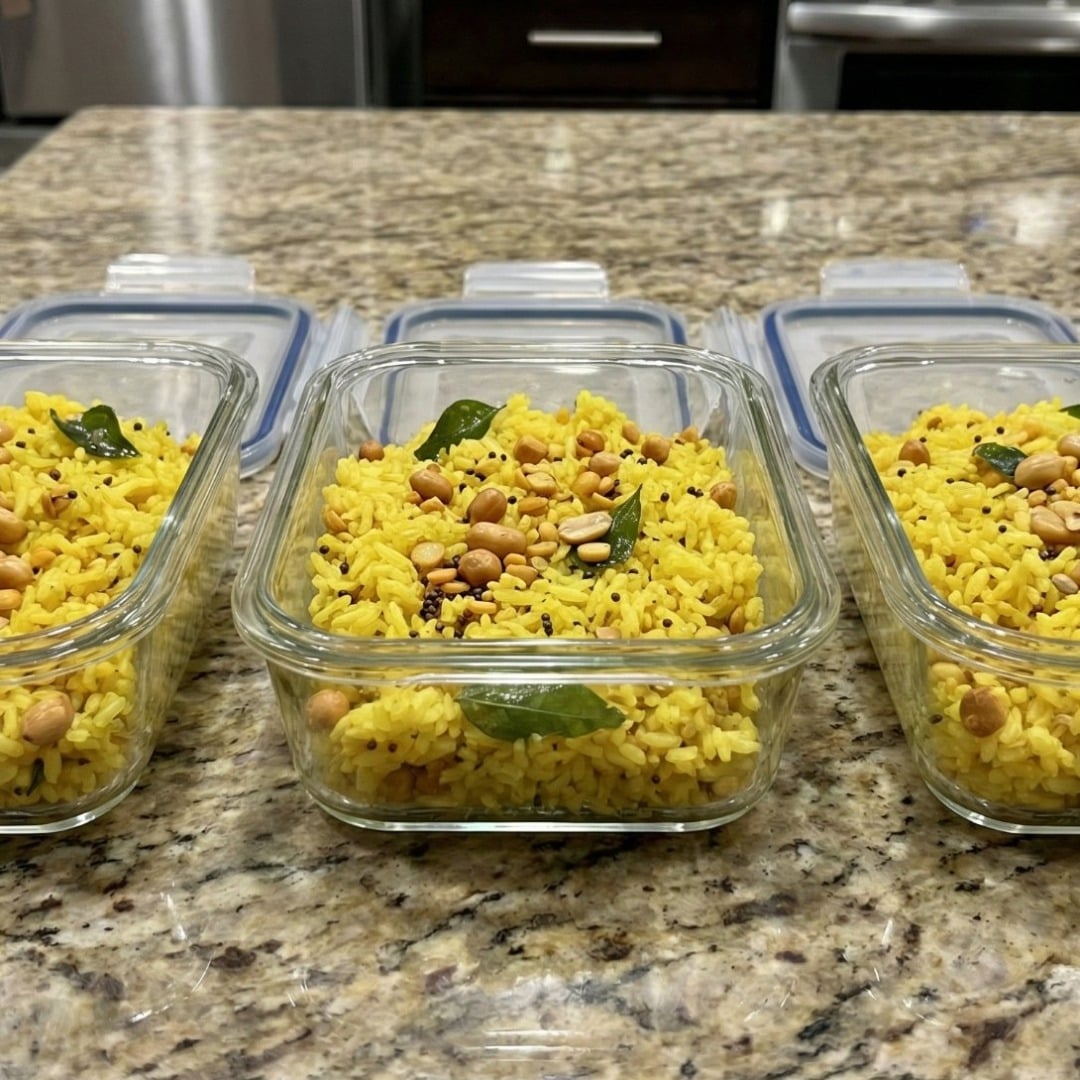
| Lemon rice, puliyogare, tamarind rice | Sona masoori | Firm enough to toss, absorbs the tempering | Basmati, cooked dry |
| Pongal and khichdi | Sona masoori, or broken basmati | Cooks down to a porridge with dal | Short-grain or broken rice |
| Kerala meals (sadya) | Matta (red parboiled) | Nutty, chewy, stands up to coconut curries | Brown basmati |
| Bengali everyday rice | Gobindobhog or miniket | Small, aromatic, slightly sticky | Kalijeera, or short-grain white |
| Kheer and payasam | Gobindobhog, or broken basmati | Small grains break down into the milk | Basmati, rinsed and broken by hand |
| Idli and dosa batter | Idli rice (parboiled short grain) | Parboiling gives the batter body and fluff | Parboiled (converted) rice |
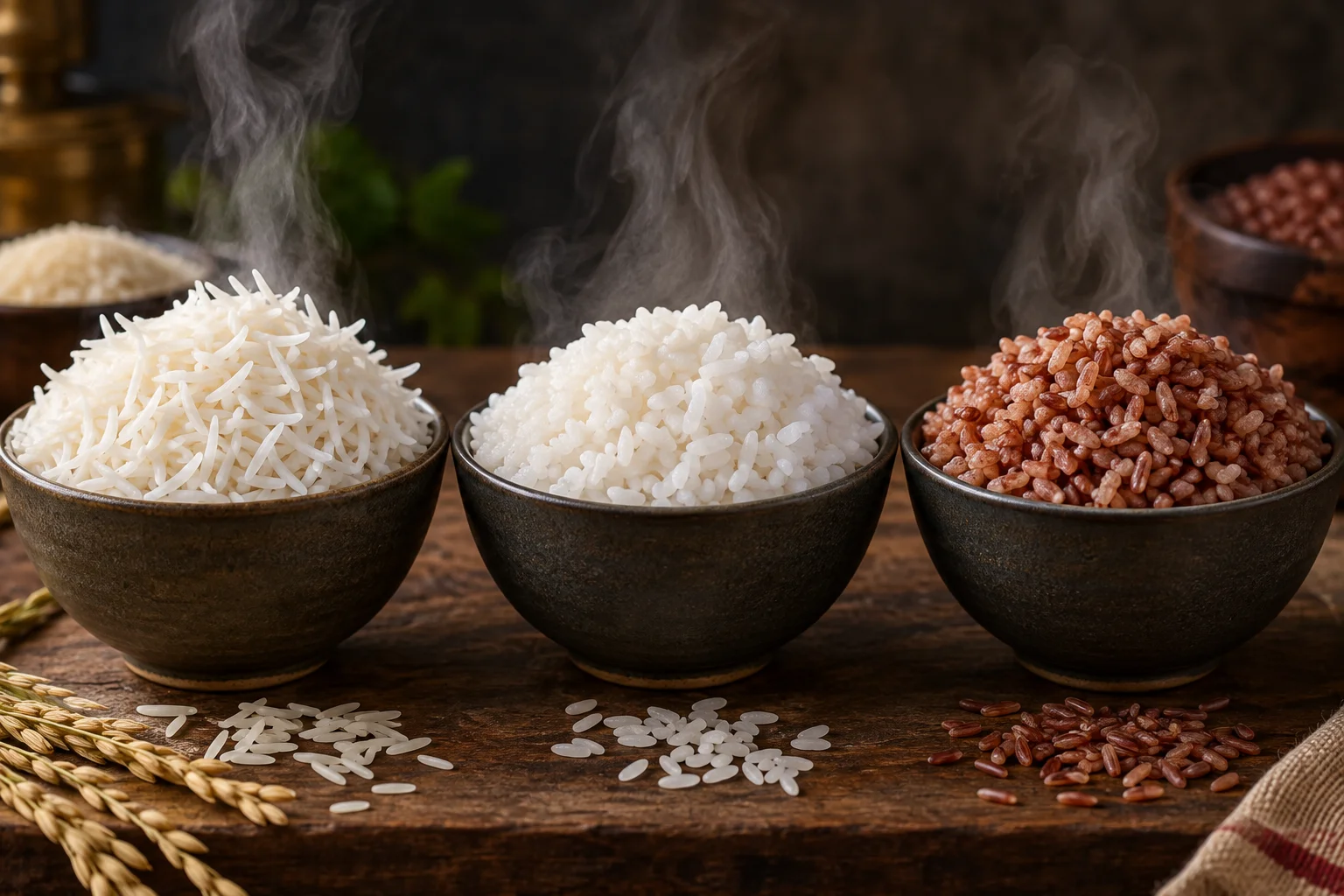 Left to right: fluffy long-grain basmati, soft medium-grain sona masoori, and chewy red matta rice
Rice by Region: Why India Cooks with More Than One Grain
The dish-to-rice match above is not arbitrary. Each grain grew where the food around it developed, and the two evolved together.
North India: Basmati Country
Basmati grows in the Himalayan foothills, across Punjab, Haryana, Uttarakhand, and western Uttar Pradesh in India and Punjab in Pakistan. It is the rice of Mughlai cooking, so it is the rice of biryani, pulao, and the rich gravies that people outside India think of as "Indian food." Its long grains cook up dry and separate, which is exactly what you want next to a butter chicken or a rogan josh. Our basmati vs jasmine rice guide goes deep on the grain itself.
South India: Sona Masoori, Ponni, and Matta
The daily rice of Andhra Pradesh, Telangana, and Karnataka is sona masoori, a lightweight medium grain with almost no aroma and a soft, absorbent texture. Tamil Nadu leans on ponni, a similar medium grain. Both are built for food that gets mixed by hand: sambar rice, rasam rice, curd rice, and the tempered rices like lemon rice and puliyogare. Basmati is the wrong tool here, too firm and too perfumed. Kerala is different again: the traditional rice is matta, a red-bran parboiled grain that is chewy, earthy, and strong enough to hold its own against fish curry and coconut gravies. If you are deciding between the two big everyday grains, read sona masoori vs basmati.
East India: Small Aromatic Grains
Bengal and Odisha grow short, fragrant rices such as gobindobhog and kalijeera. They are slightly sticky when cooked and intensely aromatic, and they are the grain for Bengali kheer (payesh), khichuri, and everyday rice with fish. Miniket, a polished medium grain, is the modern everyday choice in Kolkata kitchens.
West India: Both Traditions Meet
Maharashtra and Gujarat sit between the two systems. Ambemohar, a small fragrant Maharashtrian rice, is prized for everyday meals, while basmati appears for pulao and special occasions. Gujarati khichdi is often made with a plain medium grain rather than basmati.
Choosing Rice for Specific Dishes
The table gives the answer. These sections explain the reasoning for the dishes people ask about most.
Best Rice for Biryani
Aged long-grain basmati, and it is worth being specific. Biryani rice is parboiled to about 70 percent, layered with the masala, and steamed. Only a dry, low-moisture grain survives that without going soft. Aged basmati has had a year or more for its moisture to drop, so it elongates dramatically and stays separate. New-crop basmati, jasmine, or any medium grain will clump. Restaurants often use parboiled sella basmati for bulk biryani because it is nearly impossible to overcook. Our aged basmati rice guide explains what the "aged" label really means, and the regional biryani guide covers how the rice is handled differently in Hyderabad, Lucknow, and Kolkata.
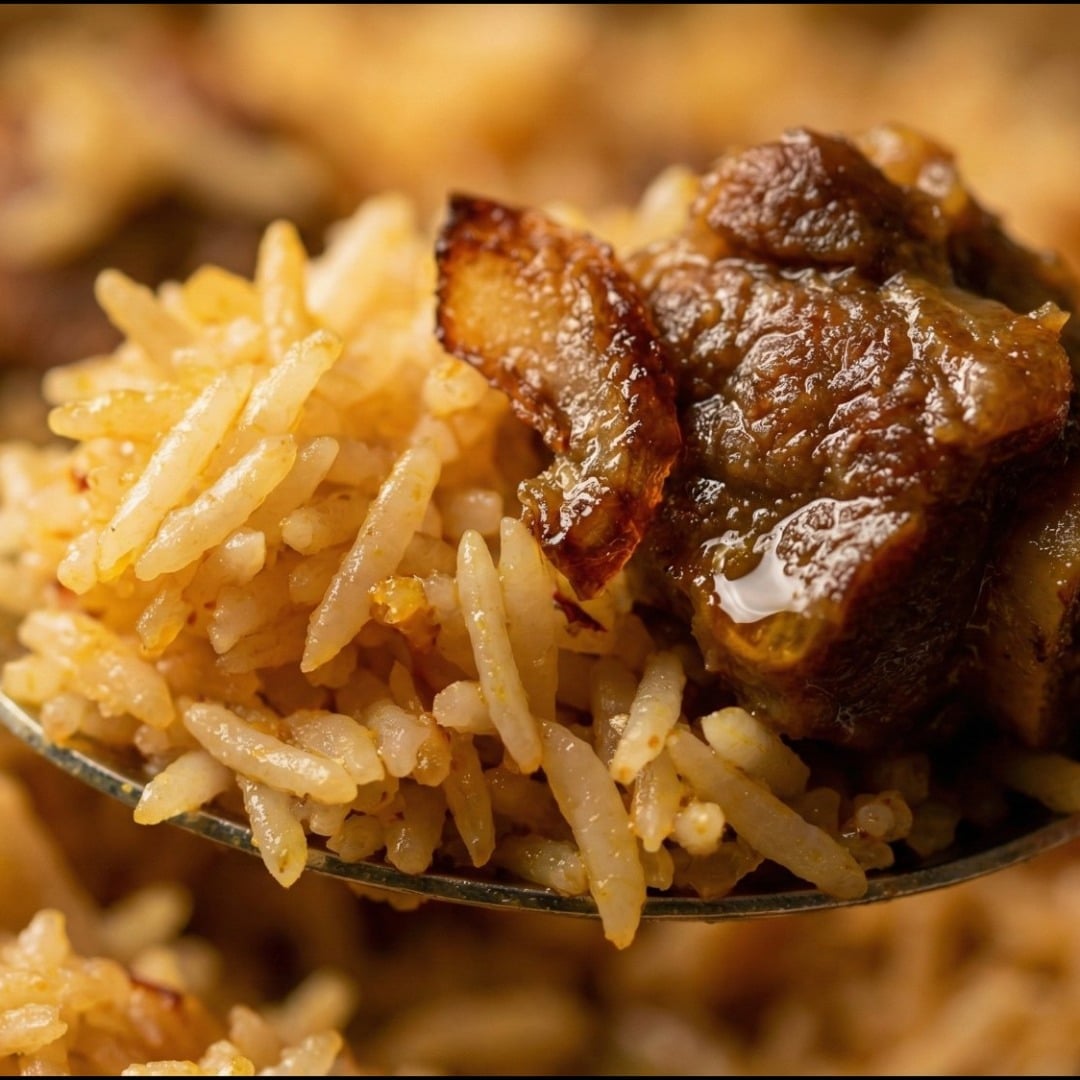 Hard
HardFeatured Recipe
48-Hour Hyderabadi Mutton Biryani My Family Guards With Their Life
This is the biryani my grandmother made for weddings. Starts 48 hours before serving – no shortcuts, no compromises. The aroma will travel three streets.
Best Rice for Curry
Basmati, for the same reasons. The question people are really asking is "basmati or jasmine for curry," and the answer is basmati: its grains stay distinct under a gravy and its aroma is nutty rather than floral. Jasmine is not a disaster next to a curry, but it cooks softer and stickier, and the sweet perfume can read as Thai. For butter chicken, tikka masala, chana masala, or dal, plain steamed basmati or jeera rice is the pairing every Indian restaurant uses. See what to serve with butter chicken for how rice fits into the full plate.
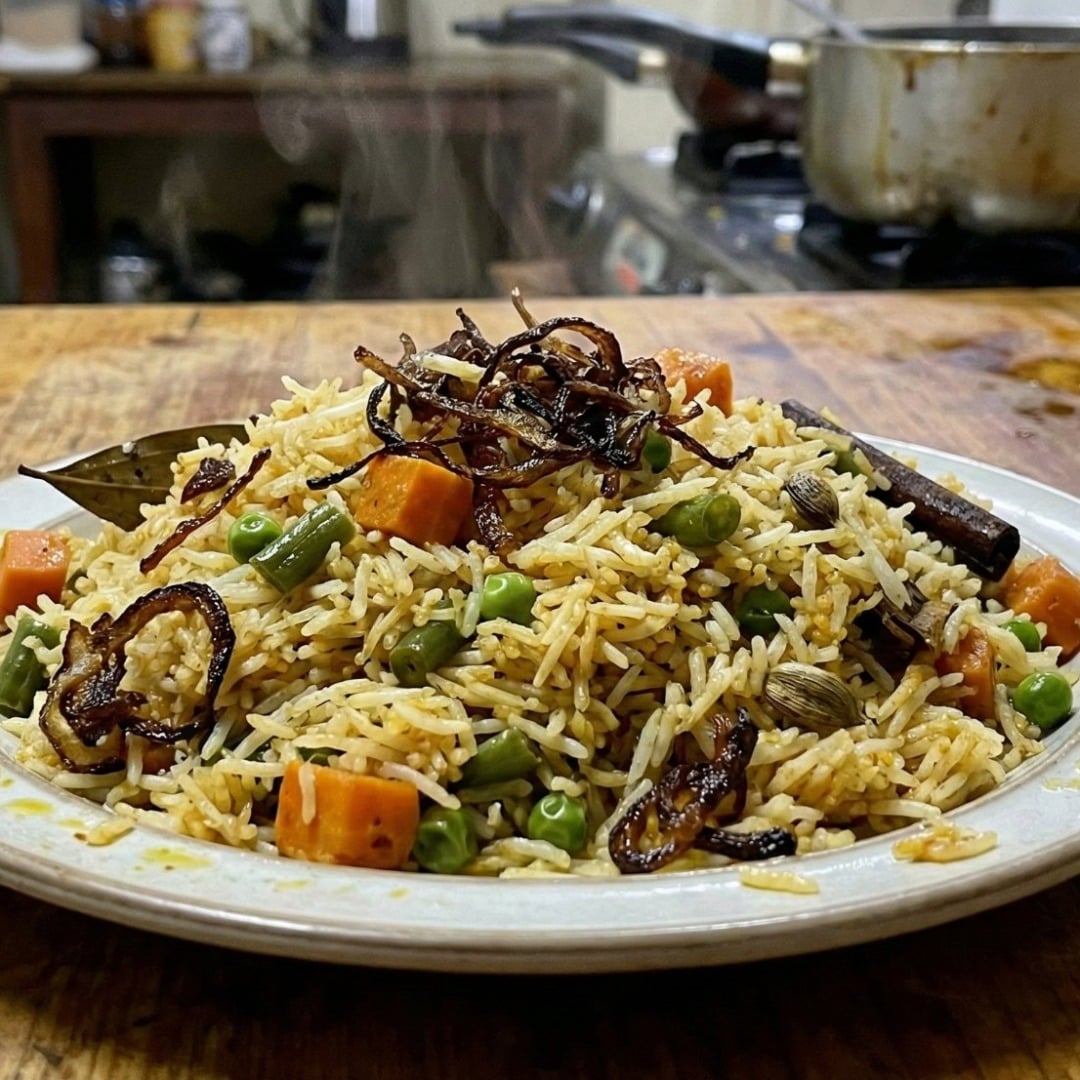 Easy
EasyFeatured Recipe
Vegetable Pulao with Fried Onions
simple veg pulao. fried onion garnish is a must
Best Rice for Curd Rice, Lemon Rice, and Pongal
Sona masoori. Curd rice needs a grain that cooks soft and mashes into the yogurt, which basmati refuses to do. Lemon rice and puliyogare need a firm-but-absorbent grain that takes on the tempering without falling apart. Pongal and khichdi need rice that breaks down with the dal into a porridge. Sona masoori does all three; if you cannot find it, ponni or any medium-grain white rice is closer than basmati.
 Easy
EasyFeatured Recipe
Lemon Rice (Lunchbox Staple)
Tangy, yellow, and crunchy with peanuts. This tastes better after sitting for a few hours, making it perfect for office lunches.
Rajma Chawal and Dal Chawal
These are the weeknight bowls, and they are forgiving. Basmati is the North Indian standard and gives you the fluffy rice that rajma gravy soaks into. An everyday long-grain rice works too. The rajma chawal guide covers the beans; the rice just needs to be hot and fluffy.
 Medium
Featured Recipe
Rajma Chawal (The Ultimate Comfort Bowl)
Sunday lunch staple. The gravy should be thick and glossy, not watery. I use the dark red kidney beans for better flavor.
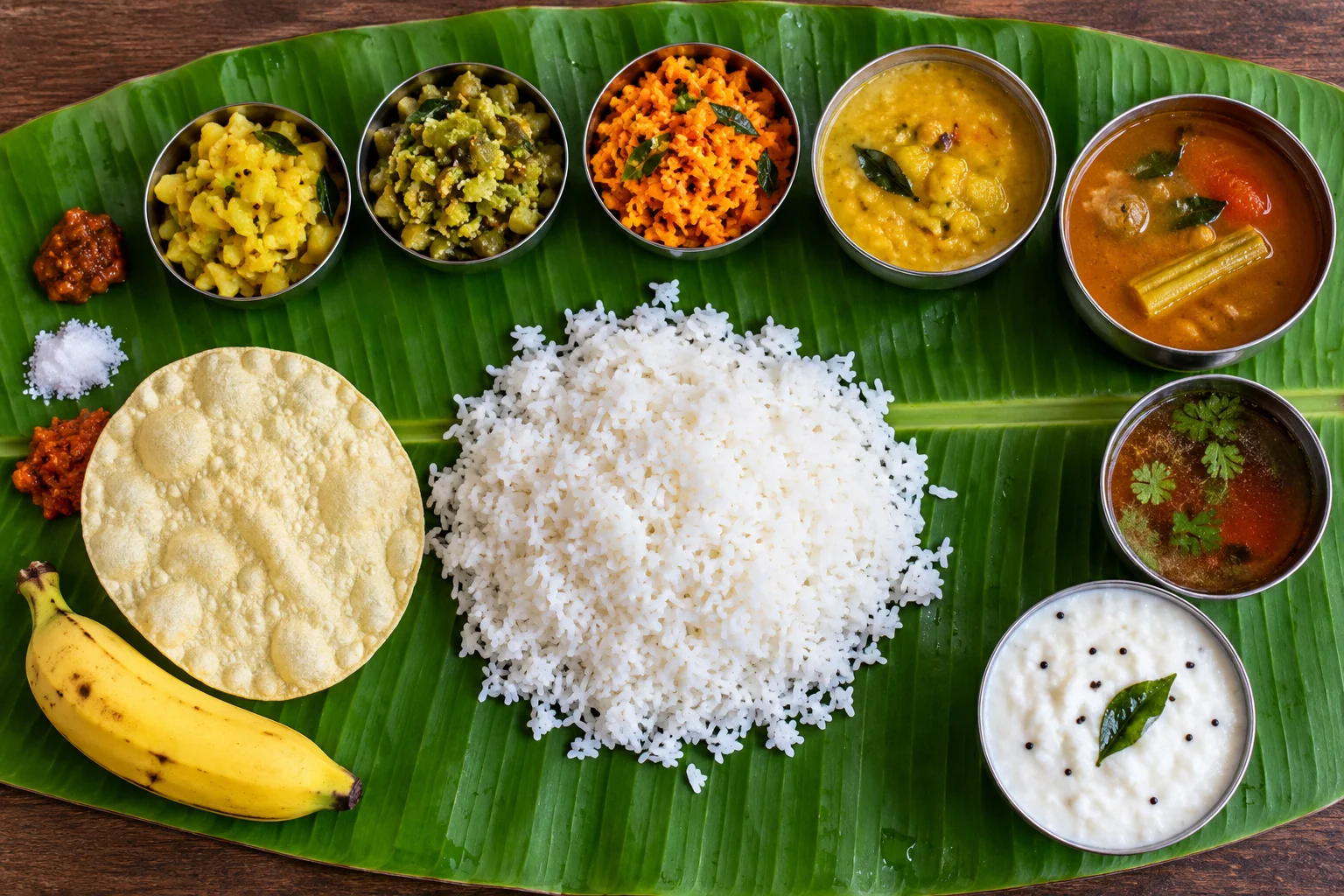 A South Indian meal is built around soft medium-grain rice that mixes easily by hand
How the Grains Cook Differently
Knowing why the rices behave differently makes the substitutions obvious.
- Basmati is high in amylose, the starch that keeps grains separate. Rinse until the water runs clear, soak 20 to 30 minutes, and cook with roughly one and a half parts water to one part rice by absorption, or boil in plenty of water and drain like pasta. Rest it covered for 10 minutes and fluff with a fork.
- Sona masoori is a lighter, softer grain. Rinse, skip the long soak, and use closer to two parts water to one part rice for a soft result, or a little less for lemon rice, where you want the grains to stay distinct. A pressure cooker is the traditional tool.
- Matta is parboiled with the red bran on, so it takes longer. Soak for 30 minutes and cook with three parts water or more; a pressure cooker cuts the time to about 20 minutes.
- Idli rice is not cooked as a grain at all. It is soaked and ground with urad dal into batter, and the parboiling is what gives idli its soft, open crumb.
Note
What to Buy
If you keep one bag: aged basmati. It covers biryani, pulao, jeera rice, and rice with every North Indian curry, and it is what any Indian restaurant would serve you. Look for "aged" on the label, and for grains that are long, slender, and unbroken.
If you keep two: add sona masoori. It makes better South Indian food and better everyday rice for mixing with dal and yogurt, and it costs less.
If you cook a lot of one region's food: buy that region's grain. Matta for Kerala cooking, gobindobhog for Bengali sweets and khichuri, idli rice if you make your own batter.
Browse the rice and biryani recipes on MasalaBear to see each of these grains in a real dish.
The Bottom Line
Indian food does not have a single rice; it has a rice for each job. Basmati for anything where you want separate, fluffy grains, which is biryani, pulao, and rice next to a curry. Sona masoori or ponni for South Indian meals and anything you mash, mix, or temper. Matta for Kerala, small aromatic grains for Bengal, parboiled idli rice for batter.
If you are standing in the aisle with one decision to make, buy a good aged basmati. It is the rice that gets most Indian dishes right, and you can add the others as your cooking spreads across the map.
Frequently Asked Questions
- What kind of rice is used in Indian food?
- It depends on the region. North India cooks mostly with long-grain basmati for biryani, pulao, and rice served with curry. South India eats medium-grain everyday rices like sona masoori and ponni with sambar, rasam, and curd rice. Kerala uses red parboiled matta rice, and Bengal favours small aromatic grains like gobindobhog.
- What type of rice is best for Indian curry?
- Basmati. Its long, separate, fluffy grains hold their shape under a gravy instead of turning to mush, and its nutty aroma suits spiced food. Aged basmati is best if you can find it. Jasmine rice works in a pinch but cooks softer and stickier.
- Do Indian restaurants use basmati or jasmine rice?
- Basmati, almost without exception. Restaurants typically use aged, extra-long basmati, often the parboiled sella type, because it stays separate on a steam table and stands up to being reheated. That fluffy, faintly spiced restaurant rice is basmati cooked with a bay leaf, cumin, or a few whole spices.
- What rice is best for biryani?
- Aged long-grain basmati, soaked for 20 to 30 minutes and parboiled before layering. Aging lowers the grain's moisture so it elongates and stays separate through the final steaming. New-crop basmati and medium-grain rices clump, which is the most common reason a homemade biryani turns out sticky.
- Can I use jasmine rice for Indian food?
- Yes for plain rice alongside a curry, where it is fine. No for biryani or pulao, where separate grains are the whole point. Jasmine has more of the sticky starch amylopectin, so it clings, and its floral aroma reads as Thai rather than Indian.
- If I only buy one rice for Indian cooking, which should it be?
- A good aged basmati. It handles biryani, pulao, jeera rice, and plain rice with any curry, which covers most North Indian and restaurant-style cooking. Add a bag of sona masoori later if you cook South Indian food regularly, since it makes better curd rice, pongal, and lemon rice.