Rajma Chawal: A Complete Guide to North India's Ultimate Comfort Bowl
 MasalaBear Team
Rajma chawal is the Sunday lunch that defines North Indian home cooking. A complete guide to bean varieties, regional styles, and the slow-cook technique that makes it legendary.
Every North Indian family has rajma chawal on Sunday.
It's not a decision. It's a tradition so deep that skipping it feels like a small betrayal — of your childhood, of your mother's kitchen, of the smell that used to drift from the kitchen at 11am while you were supposed to be doing homework. By the time it arrives at the table, the beans have been simmering for hours, the rice is steaming, and someone has already put a dollop of ghee on top to melt into the gravy.
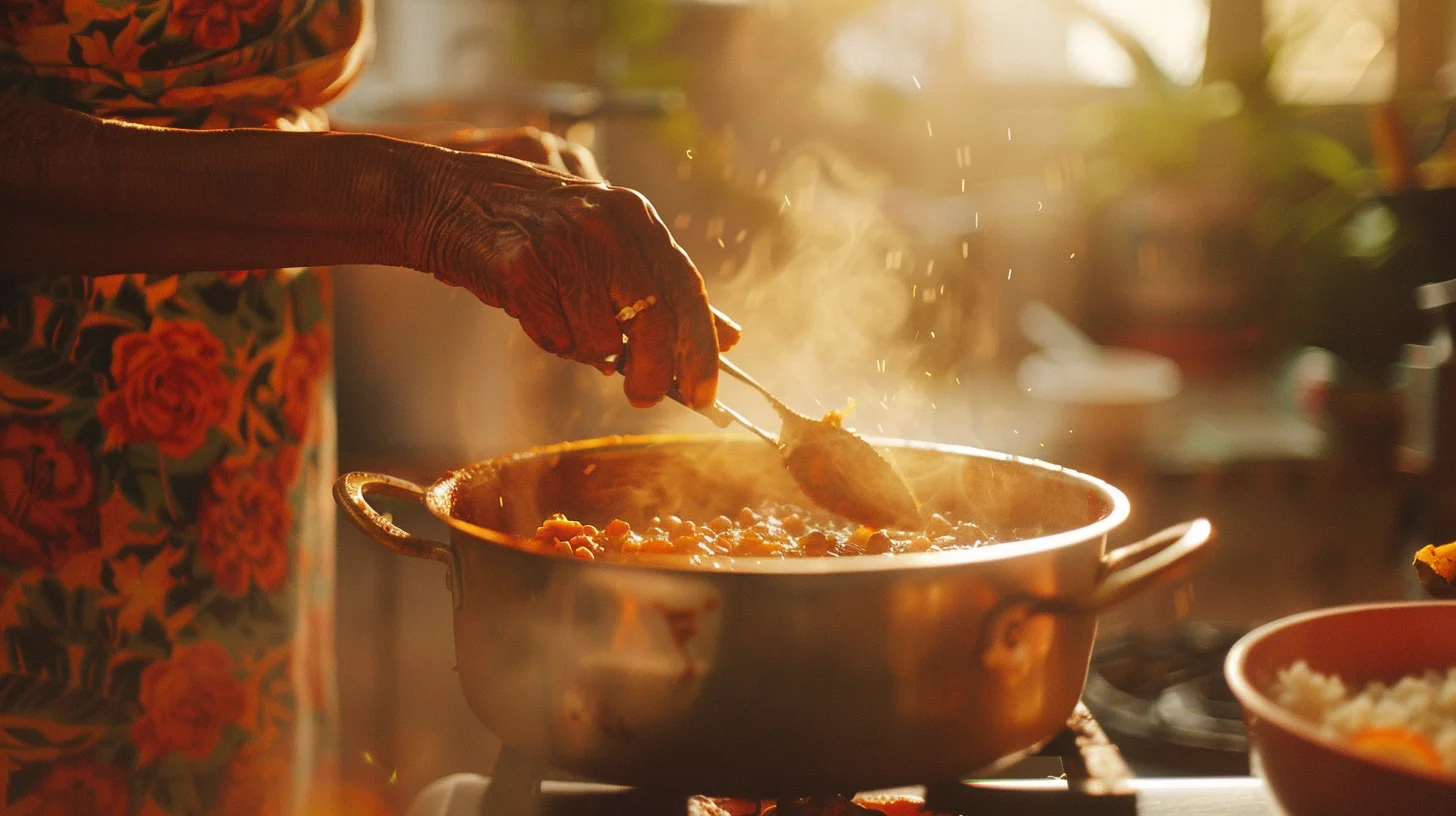
This is not restaurant food. Rajma chawal sits in a specific cultural category — ghar ka khana, "home food" — that Indians instinctively distinguish from dining-out cuisine. You rarely order it at a restaurant because it's the thing your mother makes. Ordering it feels like ordering your own memories.
Tip
Why rajma chawal matters in North Indian food culture
Unlike butter chicken or tandoori chicken, rajma chawal didn't travel out of North India. You won't find it on most Indian restaurant menus in the US or UK. That's not because it's not good — it's because it's too everyday to command restaurant prices and because Indians simply don't eat it out.
Rajma chawal is specifically Sunday lunch in Punjabi, Himachali, Dogra (Jammu), and Delhi households. It's cooked in large quantities, served with minimal garnish, and eaten at a leisurely pace with family. Leftovers improve overnight — Sunday night's dinner is often a second round of the same rajma, and it tastes better than the lunch.
The dish also appears in North Indian dhaba (roadside eatery) culture. Truckers and long-distance drivers stop at highway dhabas specifically for rajma chawal because it's cheap, filling, and the nutritional profile (protein, carbs, fiber, fat) sustains hours on the road.
Not all rajma is the same
Most home cooks outside North India use whatever kidney beans the grocery store has. Those cooks get a fine dish. But if you want great rajma chawal, the bean variety matters — and it matters more than almost any other single decision.
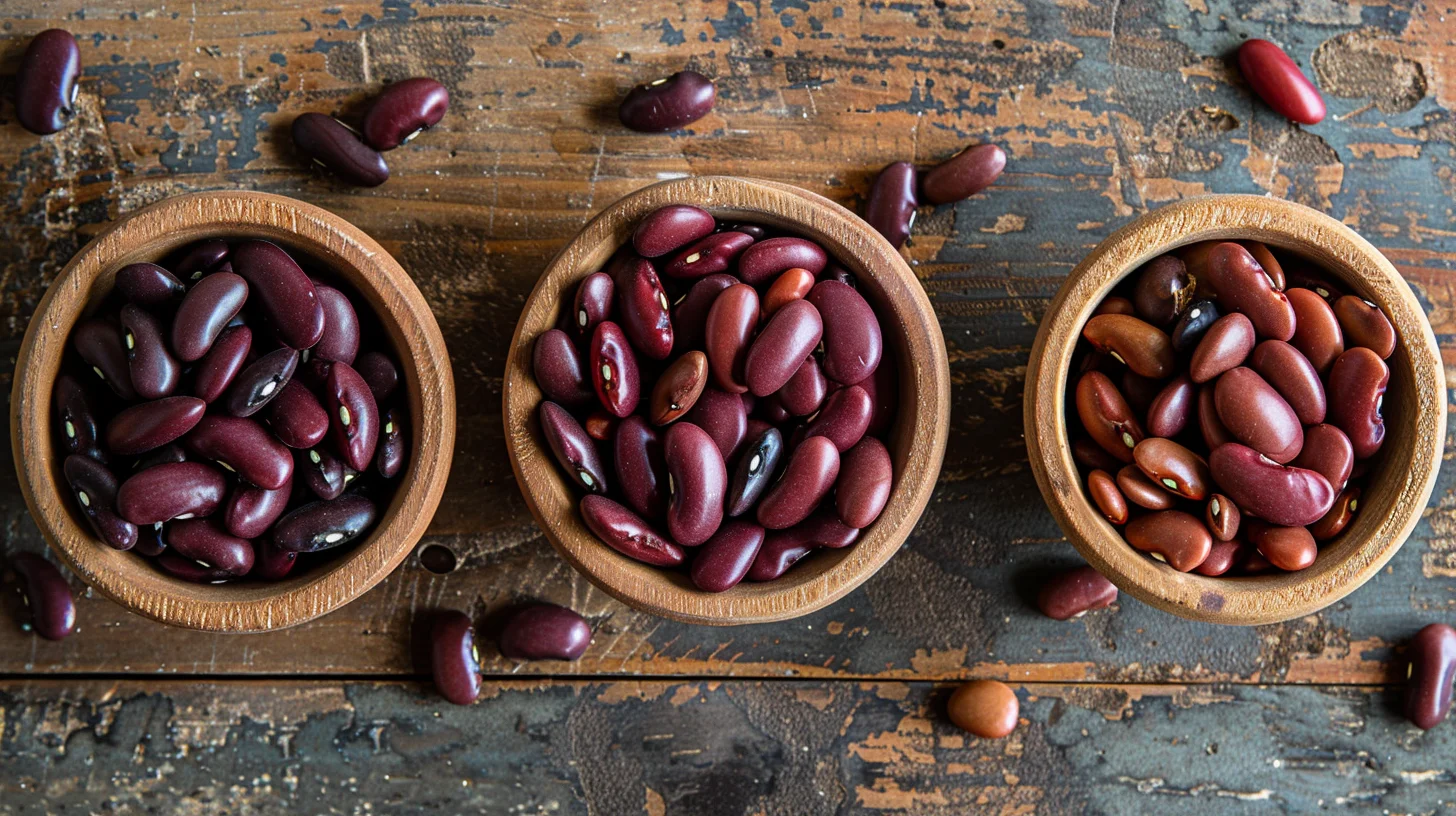
Jammu rajma (Bhaderwahi rajma)
Grown in the Bhaderwah region of Jammu. These are small, dark red-to-burgundy beans with a thin skin. They take longer to soak and longer to cook than standard kidney beans, but the payoff is a noticeably creamier, more flavorful result — the beans break down slightly into the gravy, giving the dish a rounded texture that commercial kidney beans can't match.
Jammu rajma is the connoisseur's choice. Families who have grown up on this variety cannot go back to regular kidney beans and not taste the difference. Available from Indian grocery stores, usually labeled "Jammu rajma" or "Bhaderwahi rajma."
Kashmiri rajma
Even smaller than Jammu rajma, pale red to brown, grown in the Kashmir valley. Milder in flavor, with a softer skin. Less widely known outside Kashmir, but traditional in Kashmiri home cooking. Cooks quickly once soaked. The gentlest of the three in flavor.
Regular red kidney beans
The standard dark-red kidney bean (Phaseolus vulgaris) available in every supermarket. Larger, fuller beans with a thicker skin and a more neutral flavor. Good, reliable, widely available. The absolute majority of rajma chawal served in homes outside Jammu/Himachal uses these because they're what's available.
If this is all you have, your rajma will still be excellent. Just know that the other two varieties exist and seek them out at an Indian grocery store when you can.
What to avoid
- Light/pink kidney beans — too soft, break apart
- Cannellini beans — wrong shape, too mild, white
- Dried beans that are over 1 year old — won't soften no matter how long you cook
- Canned kidney beans for traditional slow-cooked rajma — they're pre-cooked and can't develop the same depth of flavor. Canned beans work for emergency weeknight versions but aren't ideal.
Regional styles of rajma chawal
Punjabi rajma
The most widely-known style. Robust, tomato-heavy gravy with a deep red-brown color. Onion-ginger-garlic base cooked until deeply golden, then tomato puree simmered in until the oil separates. Spiced with Kashmiri chili, turmeric, coriander, and a little garam masala. Thicker, richer, more assertive than the other styles. This is what most "rajma chawal" means in a restaurant.
Dogra / Jammu rajma (Bhaderwahi style)
The traditional home style of the Jammu region, which is where the best rajma comes from. Relies on small Jammu rajma beans, slow-cooks them for hours, and uses a lighter spice hand — less garam masala, more whole spices, minimal tomato. The natural creaminess of the beans carries the dish. The gravy is thinner and lighter-colored than the Punjabi version.
Himachali rajma (Madra)
Himachali households sometimes make a distinctive version called rajma madra — rajma slow-cooked in a yogurt-based gravy rather than a tomato base. It's lighter, more aromatic, with a distinctive sour-creamy note from the yogurt. Traditional to the Kangra and Chamba regions.
Kashmiri rajma
Uses small Kashmiri rajma beans and a lighter, fennel-forward spice profile (consistent with Kashmiri cooking generally). Less tomato-heavy than Punjabi, more aromatic than Jammu. Often finished with a tempering of mustard oil.
UP / Delhi home style
The everyday North Indian rajma most urban families cook — essentially Punjabi style but adjusted for weeknight convenience. Pressure-cooked, tomato-forward, mildly spiced, served with basmati rice. Less distinctive than the regional traditions but more representative of what most North Indians actually eat.
How rajma chawal is served
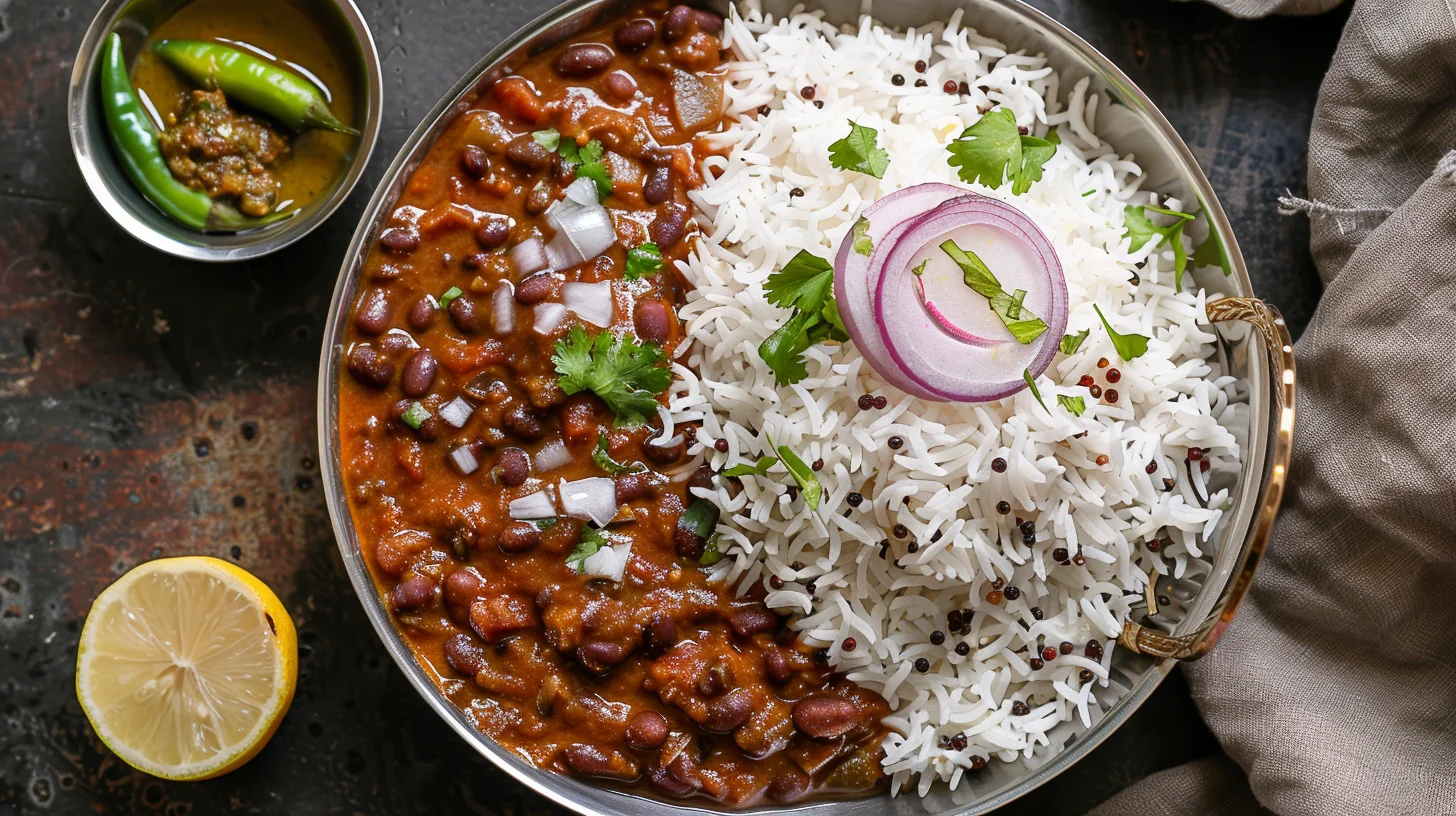
The plating is as specific as the cooking. A proper plate of rajma chawal has:
- Rice on one side, usually steamed basmati or jeera rice (basmati with tempered cumin seeds)
- Rajma on the other side, ladled over the edge of the rice so the gravy starts soaking in
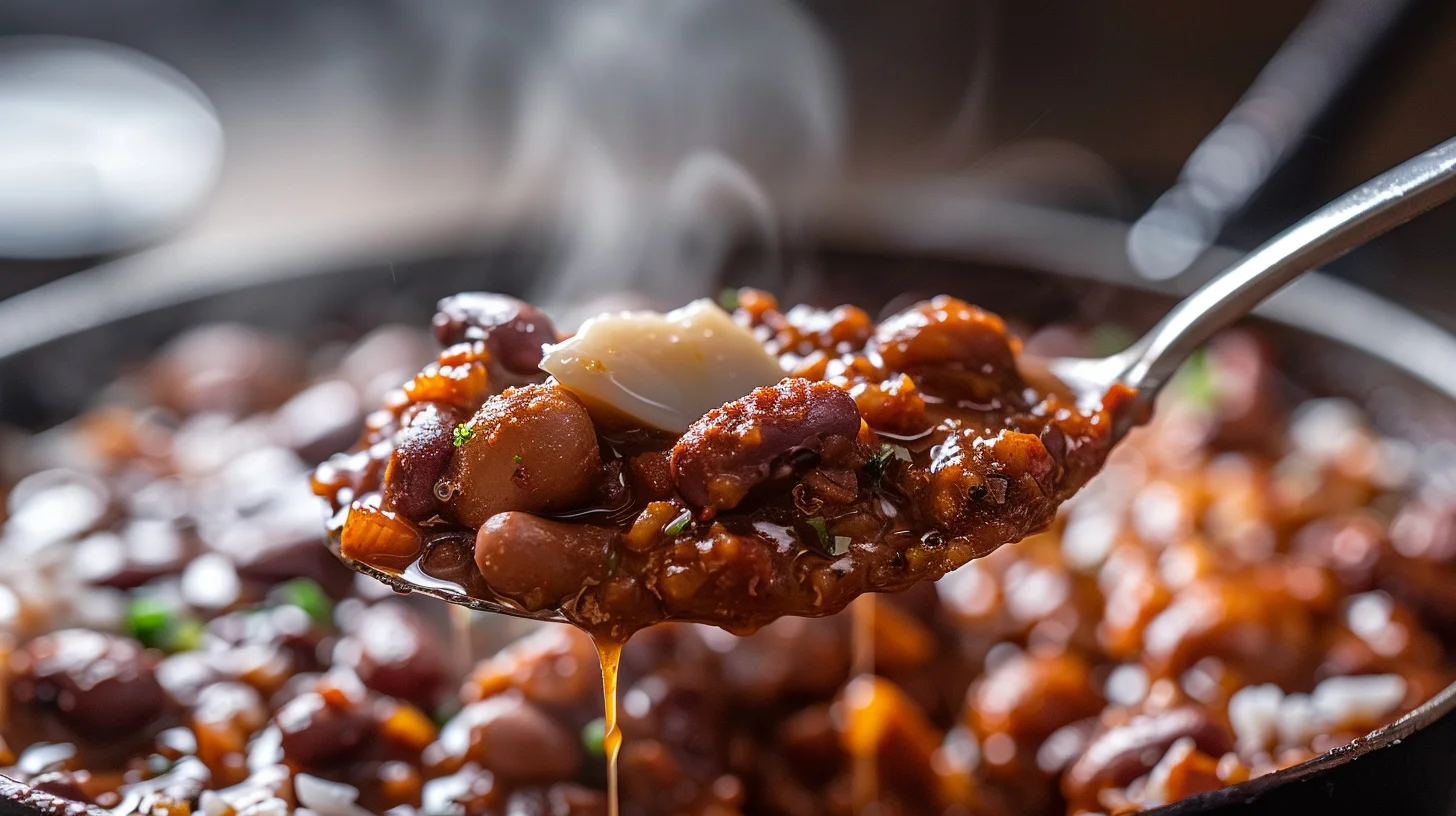
- A dollop of ghee melting on top of the rajma — not optional, for most families
- Sliced raw red onions, usually a small mound on the side
- A lemon wedge for squeezing over the beans
- A green chili, fresh and whole, bitten into between bites
- A pickle — mango pickle in summer, lemon pickle year-round, or mixed achaar
- A glass of chaas (buttermilk) on the side, gently spiced with cumin and salt
The eating ritual is also specific. You mix the rajma and rice on your plate with your right hand, forming small bite-sized combinations of bean, gravy, and rice. Take a bite, then an onion slice, then a squeeze of lemon. Sip the chaas between bites. The whole meal is a slow rhythm, not a rush.
Note
The slow-cook question: pressure cooker vs traditional
This is the most debated technical choice in rajma chawal. Every North Indian home has an opinion.
Pressure cooker (4-6 whistles, ~30 minutes)
The practical majority. Soaked rajma cooks in a stovetop pressure cooker in 4-6 whistles. Instant Pot equivalent is 25-30 minutes on high pressure with natural release. This is how most families cook rajma on a weeknight. The result is tender, flavorful, and nobody will complain.
Slow-simmer (2-4 hours)
The connoisseur's method. Soaked rajma simmered gently in an open pot or slow cooker for 2-4 hours produces a texture pressure cooking can't match — the beans become creamier, more of them break down into the gravy, and the oil separates more cleanly. Sunday-lunch rajma at a Punjabi grandmother's house is almost always slow-cooked.
Hybrid approach
A common compromise: pressure-cook the soaked rajma first (just the beans and water, no spices) for 3 whistles to guarantee tenderness, then transfer to an open pot, add the onion-tomato masala, and simmer slowly for another 45-60 minutes. This gets you the slow-cooked texture without a 4-hour afternoon commitment.
Common mistakes when cooking rajma chawal
Mistake: Under-soaking the rajma
The single most common mistake. Rajma that hasn't been soaked long enough will never fully tenderize, no matter how long you cook it. Minimum 8 hours of cold-water soak; overnight (10-12 hours) is ideal. If you forgot to soak in advance, use the 2-minute boil + 1-hour rest method.
Mistake: Using old beans
Dried kidney beans older than about 12 months will stay chalky and tough even after long cooking. If your beans aren't softening after soaking and 90 minutes of cooking, the beans are the problem, not your technique. Check the package date or buy from a store with rapid turnover.
Mistake: Not bhuna-ing the masala enough
Bhuna means frying the onion-tomato-spice base until the oil visibly separates from the masala — a sign that the water has cooked off and the flavors have concentrated. Many home cooks rush this step. Without a proper bhuna, the gravy tastes thin and raw.
Mistake: Adding salt too early
Beans absorb salt slowly. Adding salt at the start of cooking can toughen the skins and prevent them from softening. Add salt in the last 20-30 minutes of cooking for the best texture.
Mistake: Skipping the ghee finish
A small spoon of ghee stirred in at the end of cooking (or melted on top at serving) transforms the dish. It rounds the flavors, adds aromatic depth, and lifts the gravy. It's not optional for the full experience. Vegan? Substitute with a good oil (mustard oil is traditional in some regions) or skip — but know you're missing a signature note.
Mistake: Over-spicing
Rajma chawal is not a heavily-spiced dish. It relies on slow cooking, the natural flavor of the beans, and a balanced onion-tomato base. Restaurants over-spice rajma because they need it to taste bolder to compete with the menu around it. Home rajma should be mellow, warming, and clean — let the beans and the slow cook do the work.
Make-ahead and storage
Rajma improves overnight. The flavors meld, the beans absorb more of the gravy, and the overall dish becomes richer and more coherent. Many North Indian families explicitly cook a larger batch on Sunday specifically so Monday's lunch can be warmed-over rajma — and many argue the leftover is better than the original.
- Refrigerated: Keeps 4-5 days in an airtight container. Reheat gently with a splash of water to loosen the gravy.
- Frozen: Freezes well for up to 3 months. Freeze in portion-sized containers. Thaw overnight in the fridge before reheating.
- The rice: Always make fresh rice when serving. Leftover rice reheated never has the same texture as just-cooked.
 Medium
Featured Recipe
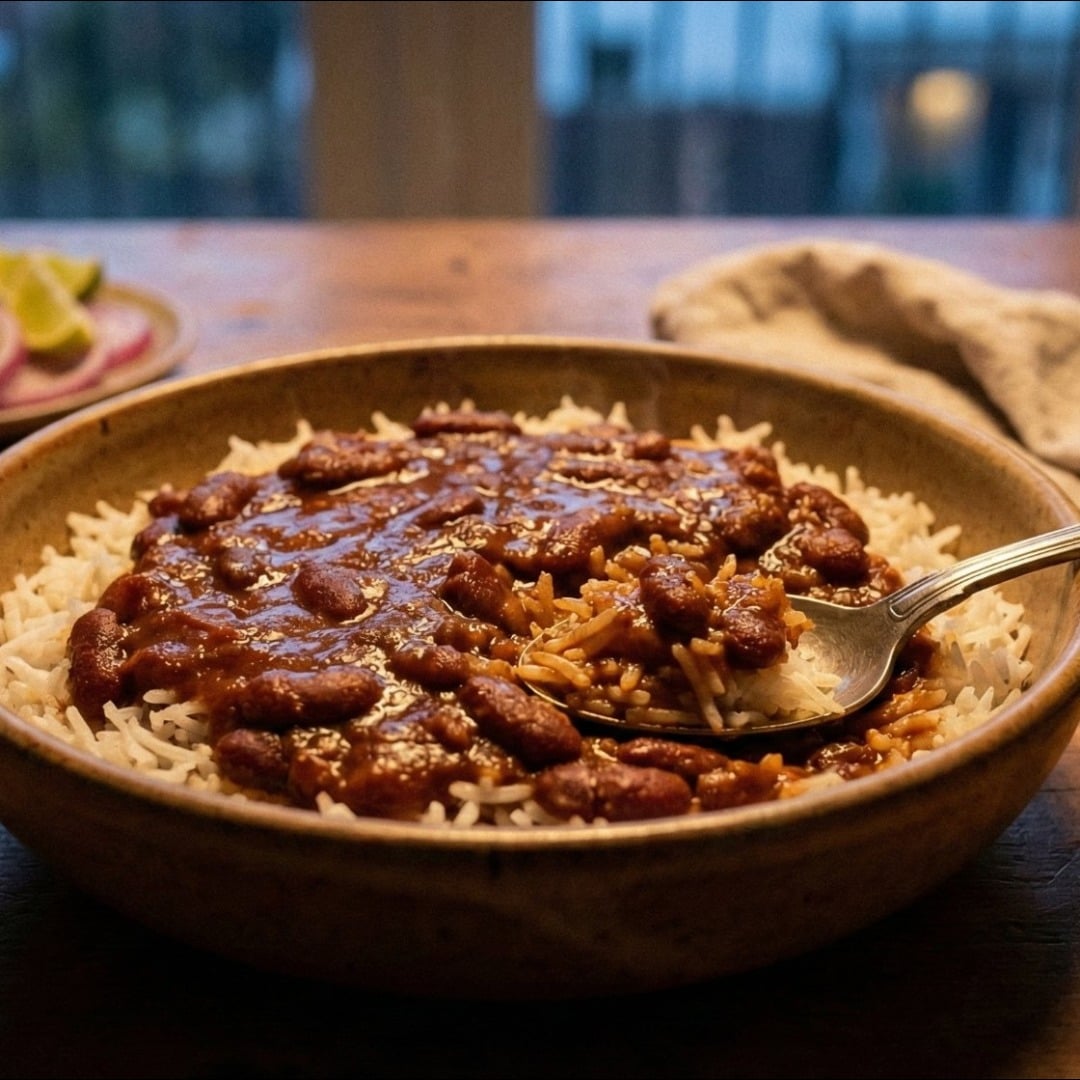
Rajma Chawal (The Ultimate Comfort Bowl)
Sunday lunch staple. The gravy should be thick and glossy, not watery. I use the dark red kidney beans for better flavor.
Frequently asked questions
What is rajma chawal?
Rajma chawal is a North Indian dish of slow-cooked kidney beans (rajma) in a spiced onion-tomato gravy, served over steamed basmati or jeera rice (chawal). It's the classic Sunday lunch in Punjabi, Himachali, Jammu, and Delhi households.
Which rajma is best for rajma chawal?
The traditional choice is Jammu (Bhaderwahi) rajma — small, dark, slow-cooking, and more flavorful. Kashmiri rajma is smaller and milder. Regular red kidney beans work fine for most home cooks and are more widely available.
How long should I soak rajma before cooking?
At least 8 hours, ideally overnight (10-12 hours). Under-soaked rajma stays tough no matter how long you cook it. Always discard the soaking water and rinse before cooking.
Is rajma chawal healthy?
Yes — rajma chawal is a complete-protein meal. Kidney beans provide plant protein, fiber, iron, and folate, and when paired with rice form a complete amino-acid profile. Naturally gluten-free and vegan-friendly (skip the ghee).
What do you serve with rajma chawal?
Traditional accompaniments are raw onion slices, lemon wedges, a dollop of ghee, pickle (mango or mixed), and a glass of chilled buttermilk (chaas).
Explore more
Looking for more North Indian comfort food? Browse our dal and curry recipes for daily staples, or dive into the best Indian curry recipes for regional variations across India. If you're cooking a full North Indian meal, pair this rajma with our take on butter chicken vs chicken tikka masala to round out a Punjabi spread.
Have a family rajma recipe with a specific technique — maybe your grandmother's Bhaderwahi method or a Himachali madra version? Submit your recipe and share it with the community.