
Basmati vs Jasmine Rice: Which is Better for Indian Food?
 MasalaBear Team
Using jasmine rice for biryani? Here's why it won't work. Compare basmati vs jasmine rice: texture, aroma, cooking methods, and which one Indian dishes actually need.
Tip
Standing in the rice aisle, you see two aromatic options: basmati and jasmine. Both smell amazing. Both are long-grain. Both cost more than regular white rice. So what's the difference, and does it actually matter?
Yes, it does. Especially if you're cooking Indian food.
At-a-Glance Comparison
| Feature | Basmati Rice | Jasmine Rice |
|---|---|---|
| Origin | India & Pakistan | Thailand |
| Grain Length | Extra long, slender | Long, slightly plump |
| Cooked Texture | Fluffy, separate grains | Soft, slightly sticky |
| Aroma | Nutty, popcorn-like | Floral, buttery |
| Flavor | Subtle, earthy | Slightly sweet |
| Best For | Biryani, pulao, curry | Thai curry, stir-fry |
| Expands When Cooked | Up to 2x in length | Stays similar size |
| Soaking Required | Yes (30 minutes) | No |
Where They Come From
Basmati: The Himalayan Grain
Basmati has been grown in the foothills of the Himalayas for thousands of years. The word "basmati" comes from Sanskrit - "bas" (aroma) and "mati" (full of) - meaning "full of fragrance."
The best basmati comes from specific regions:
- India - Punjab, Haryana, Uttarakhand (Dehradun basmati is prized)
- Pakistan - Punjab province
The unique climate, soil, and water from Himalayan snowmelt create conditions that can't be replicated elsewhere. That's why "basmati" is geographically protected in some countries - like Champagne for wine.
Note
Jasmine: Thailand's Fragrant Rice
Jasmine rice (also called Thai fragrant rice or "Khao Dawk Mali") originated in Thailand and has been cultivated there for centuries. The name comes from its floral aroma, reminiscent of jasmine flowers - though the rice and the flower aren't actually related.
The best jasmine rice comes from:
- Thailand - The Isaan region produces top-quality jasmine rice
- Cambodia - Produces excellent jasmine rice varieties
- Vietnam - Growing producer of jasmine rice
Thailand takes jasmine rice seriously - there's even an annual competition to crown the best rice.
How They Look
Basmati Grains
- Uncooked: Very long (7-8mm), slender, slightly curved
- Cooked: Elongates dramatically (up to 2x), remains separate
- Color: Translucent white (or light brown if whole grain)
Basmati grains are the supermodels of the rice world - long, elegant, and distinct.
Jasmine Grains
- Uncooked: Long but shorter than basmati (6-7mm), plumper
- Cooked: Stays roughly the same size, grains cling together
- Color: Slightly more opaque white
Jasmine grains are a bit rounder and chunkier - they look more like "regular" long-grain rice.
 Basmati (left) vs Jasmine (right) - notice the length and shape difference in the raw grains
Flavor and Aroma
This is where the magic happens - and where these rices really diverge.
Basmati's Signature Scent
Basmati has an unmistakable nutty, popcorn-like aroma. When you cook it, your kitchen smells like a combination of:
- Freshly popped popcorn
- Toasted nuts
- A subtle earthy sweetness
The compound responsible is 2-acetyl-1-pyrroline - the same molecule that makes popcorn smell like popcorn. Basmati has significantly more of it than regular rice.
The flavor is subtle but distinct: slightly nutty, clean, and almost savory. It's designed to complement bold, spiced dishes without competing with them.
Jasmine's Floral Notes
Jasmine rice has a sweet, floral aroma that's softer and more delicate:
- Jasmine or pandan-like fragrance
- Slight buttery notes
- A hint of sweetness
It also contains 2-acetyl-1-pyrroline, but in different concentrations and combined with other compounds that create its distinctive floral character.
The flavor is slightly sweet and a bit buttery - it stands on its own more than basmati does.
Texture: The Critical Difference
This is the make-or-break factor for most dishes.
Basmati: Fluffy and Separate
When cooked properly, basmati grains:
- Stay completely separate - no clumping
- Feel light and fluffy - almost dry
- Have a slight bite - not mushy
- Elongate dramatically - grains nearly double in length
This texture is essential for:
- Biryani - Where each grain should be distinct and coated in spices
- Pulao - Where rice is the star and needs to shine
- Served alongside curry - Where grains should absorb sauce without becoming mushy
Jasmine: Soft and Clingy
When cooked, jasmine rice:
- Sticks together slightly - grains cling but aren't gluey
- Feels soft and moist - tender throughout
- Has a tender bite - softer than basmati
- Maintains its size - doesn't elongate much
This texture works for:
- Thai curry - The sticky texture picks up sauce beautifully
- Stir-fry - Holds up to tossing without crumbling
- Eaten with chopsticks - The slight stickiness makes it manageable
- Rice bowls - Provides a cohesive base
Best Uses for Each Rice
When to Use Basmati
Always use basmati for:
- Biryani - Non-negotiable. The separate grains and ability to absorb spices is what makes biryani biryani
- Pulao/Pilaf - Same reason - you want distinct, flavorful grains
- Jeera rice (cumin rice) - Basmati's nuttiness complements cumin perfectly
- Alongside Indian curries - The light, separate grains contrast with rich gravies
- Persian rice dishes - Tahdig, polo, chelow
- Middle Eastern rice - Lebanese, Turkish rice preparations
Basmati also works well for:
- Fried rice (if you want separate grains)
- Rice salads
- Stuffed peppers (where you want distinct grains)
 Basmati's separate, fluffy grains are perfect for soaking up rich Indian curries
When to Use Jasmine
Always use jasmine for:
- Thai curry - Green, red, massaman - jasmine is traditional
- Southeast Asian dishes - Vietnamese, Cambodian, Laotian cuisine
- Coconut rice - The flavors pair beautifully
- Mango sticky rice - Though glutinous rice is more traditional
- With stir-fries - The slight stickiness works well
Jasmine also works for:
- General weeknight rice when you want something aromatic
- Rice bowls
- Simple steamed rice to accompany many Asian dishes
 Jasmine rice's slight stickiness is perfect for scooping up Thai curries
Basmati or Jasmine Rice for Curry?
Basmati, for any Indian curry. Its high-amylose grains stay separate under butter chicken, tikka masala, chana masala, or dal instead of turning to paste, and its nutty aroma suits spiced food. Jasmine is not a disaster next to a curry, but it cooks softer and stickier, and its sweet floral scent reads as Thai. Indian restaurants use basmati almost without exception, usually aged and often cooked with a bay leaf and a few cumin seeds. If you want the whole plate, see what to serve with butter chicken; if you want the full regional map, see which rice for which Indian dish.
Can You Use Jasmine Rice for Biryani?
Technically yes, and it will taste fine, but it will not be biryani in the way the dish is meant to be. Biryani rice is parboiled, layered, and steamed, and only a dry, separate grain survives that. Jasmine's amylopectin makes it cling, so the layers merge into a soft, sticky mass and the long saffron-streaked grains never appear. If jasmine is all you have, cut the parboil short, rinse it well, and expect a softer result. If you are buying rice for biryani, get aged basmati.
The Substitution Question
Can you substitute one for the other?
Yes, but with caveats:
- Jasmine in biryani: The texture will be wrong - sticky instead of fluffy. Your biryani will taste fine but won't look or feel right
- Basmati in Thai curry: Works better than the reverse. The separate grains just won't cling to the sauce as well
- In a pinch: Either will work for simple steamed rice, but purists will notice
How to Cook Each Rice
The cooking methods differ because of their different starch compositions.
Cooking Basmati Rice
Preparation:
- Rinse thoroughly until water runs clear (removes excess starch)
- Soak for 30 minutes (this is important - helps grains elongate)
- Drain well before cooking
Stovetop Method:
- Use a 1:1.5 ratio (1 cup rice to 1.5 cups water)
- Bring to boil, reduce heat to lowest setting
- Cover and cook for 12-15 minutes
- Rest covered for 5 minutes (crucial for fluffy rice)
- Fluff gently with a fork
Key Tips:
- Don't stir while cooking
- Don't skip the resting time
- Use a tight-fitting lid
Cooking Jasmine Rice
Preparation:
- Rinse a few times until water is less cloudy
- No soaking required - jasmine is naturally softer
Stovetop Method:
- Use a 1:1.25 ratio (1 cup rice to 1.25 cups water) - less water than basmati
- Bring to boil, reduce heat to lowest setting
- Cover and cook for 12-15 minutes
- Rest covered for 5-10 minutes
- Fluff gently
Key Tips:
- Jasmine needs less water than basmati
- It's more forgiving - harder to mess up
- Some prefer to not rinse jasmine for maximum stickiness
Warning
Nutritional Comparison
Per 1 cup cooked:
| Nutrient | Basmati (White) | Jasmine (White) |
|---|---|---|
| Calories | 210 | 205 |
| Carbs | 46g | 45g |
| Protein | 4.5g | 4.3g |
| Fat | 0.5g | 0.4g |
| Fiber | 0.7g | 0.6g |
| Glycemic Index | 50-58 | 68-80 |
Nutrition data from USDA FoodData Central. Glycemic index values from published clinical studies.
Notable difference: Basmati has a lower glycemic index, meaning it raises blood sugar more slowly. This makes it a better choice for people watching their blood sugar levels. The longer grain structure and different starch composition (more amylose) accounts for this.
Brown versions of both rices offer more fiber, vitamins, and minerals, with even lower glycemic indexes.
How to Store Rice
Both basmati and jasmine rice store similarly:
Uncooked Rice
- Pantry storage: 2+ years in an airtight container in a cool, dry place
- Aged basmati: Improves with age up to 2 years
- Jasmine: Best used within 18 months (aroma fades over time)
- Keep away from: Moisture, heat, strong odors (rice absorbs smells)
Cooked Rice
- Refrigerator: 4-6 days in an airtight container
- Freezer: Up to 6 months
- Reheating tip: Add a splash of water before microwaving to restore moisture
Warning
Buying Guide
What to Look for in Basmati
- Origin: India or Pakistan
- Age: "Aged" basmati cooks better (1-2 years)
- Grain appearance: Long, slender, minimal broken grains
- Trusted brands: Tilda, Royal, Daawat, Kohinoor, Lal Qilla
What to Look for in Jasmine
- Origin: Thailand (look for "Thai Hom Mali" - the premium variety)
- Freshness: Newer harvest has stronger aroma (unlike basmati)
- Grain appearance: Long, intact grains
- Trusted brands: Three Ladies, Golden Star, Dynasty, Thai Kitchen
Price Expectations
- Basmati: $0.10-0.20 per oz (aged/premium can be more)
- Jasmine: $0.08-0.15 per oz
- Buy in bulk: Both are cheaper at Indian/Asian grocery stores
Frequently Asked Questions
Can I use jasmine rice for biryani?
Technically yes, but the result won't be authentic. Biryani relies on basmati's ability to stay separate and elongate. Jasmine rice will make a sticky, clumpy biryani that's still tasty but not the real thing.
Which rice is healthier?
White basmati has a slight edge due to its lower glycemic index. But nutritionally, they're nearly identical. For better nutrition, choose brown versions of either.
Why is my basmati rice sticky?
Common causes:
- Too much water
- Skipped the soaking step
- Stirred while cooking
- Didn't let it rest after cooking
- Used old or broken grains
Why doesn't my jasmine rice smell fragrant?
The rice might be old - jasmine loses its aroma over time (opposite of basmati). Buy from stores with high turnover, and check for harvest dates if available.
Is one more expensive than the other?
Generally, quality basmati (especially aged) is more expensive than jasmine. But prices vary by brand and source.
Can I mix basmati and jasmine rice?
You can, but the different cooking requirements mean one will likely be over or undercooked. Stick to one type per dish.
The Bottom Line
Choose basmati when:
- Making Indian food (biryani, pulao, with curry)
- You want separate, fluffy grains
- Preparing Middle Eastern rice dishes
- Blood sugar is a concern
Choose jasmine when:
- Making Thai or Southeast Asian food
- You want softer, slightly sticky rice
- Preparing simple steamed rice for stir-fries
- You prefer a sweeter, floral aroma
Both are excellent rices - just designed for different cuisines and purposes. Having both in your pantry means you're ready for any Asian cooking adventure.
Try Basmati in These Recipes
Ready to cook with basmati the right way? Here are some MasalaBear recipes where basmati makes all the difference:
 Hard
HardFeatured Recipe
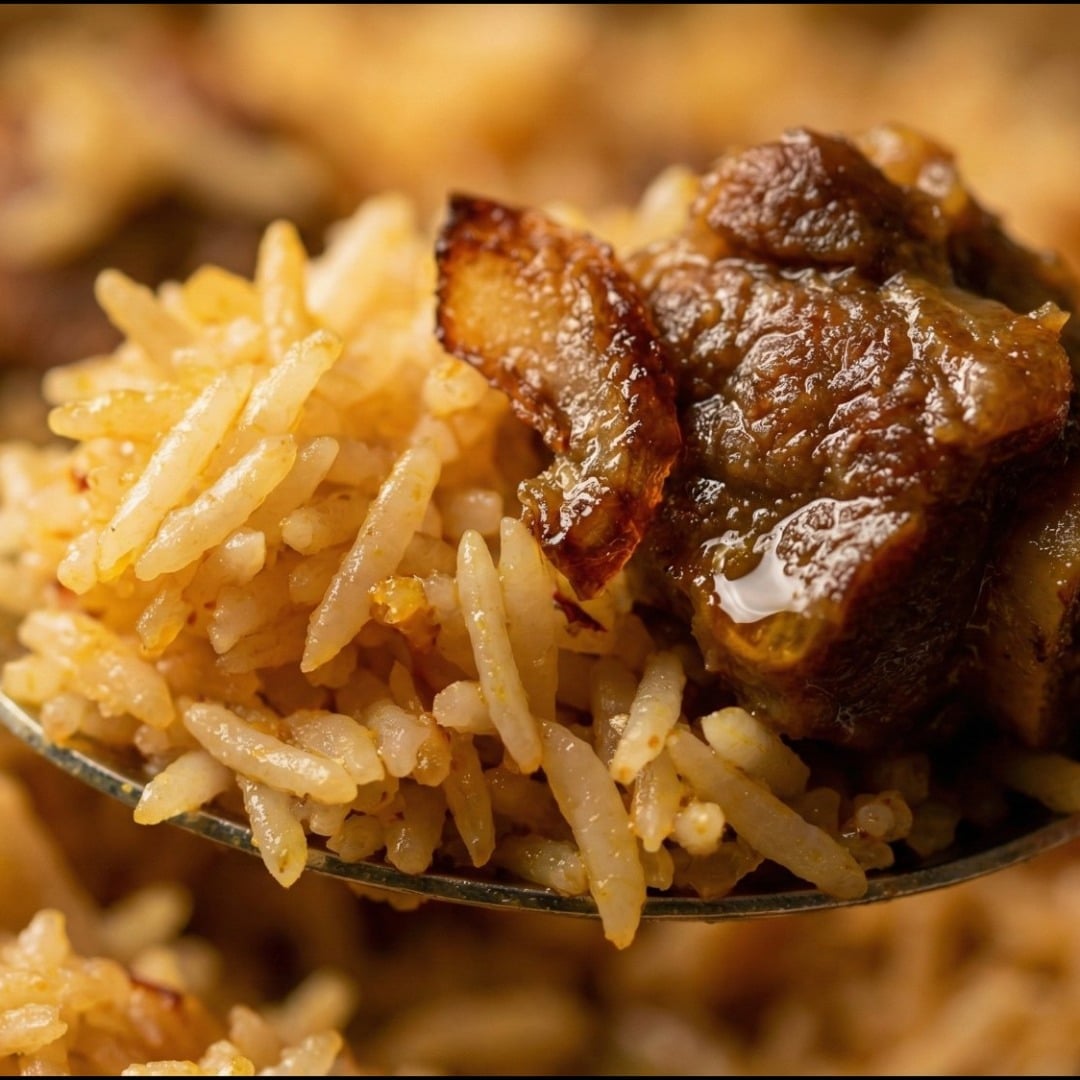
48-Hour Hyderabadi Mutton Biryani My Family Guards With Their Life
This is the biryani my grandmother made for weddings. Starts 48 hours before serving – no shortcuts, no compromises. The aroma will travel three streets.
 Easy
EasyFeatured Recipe
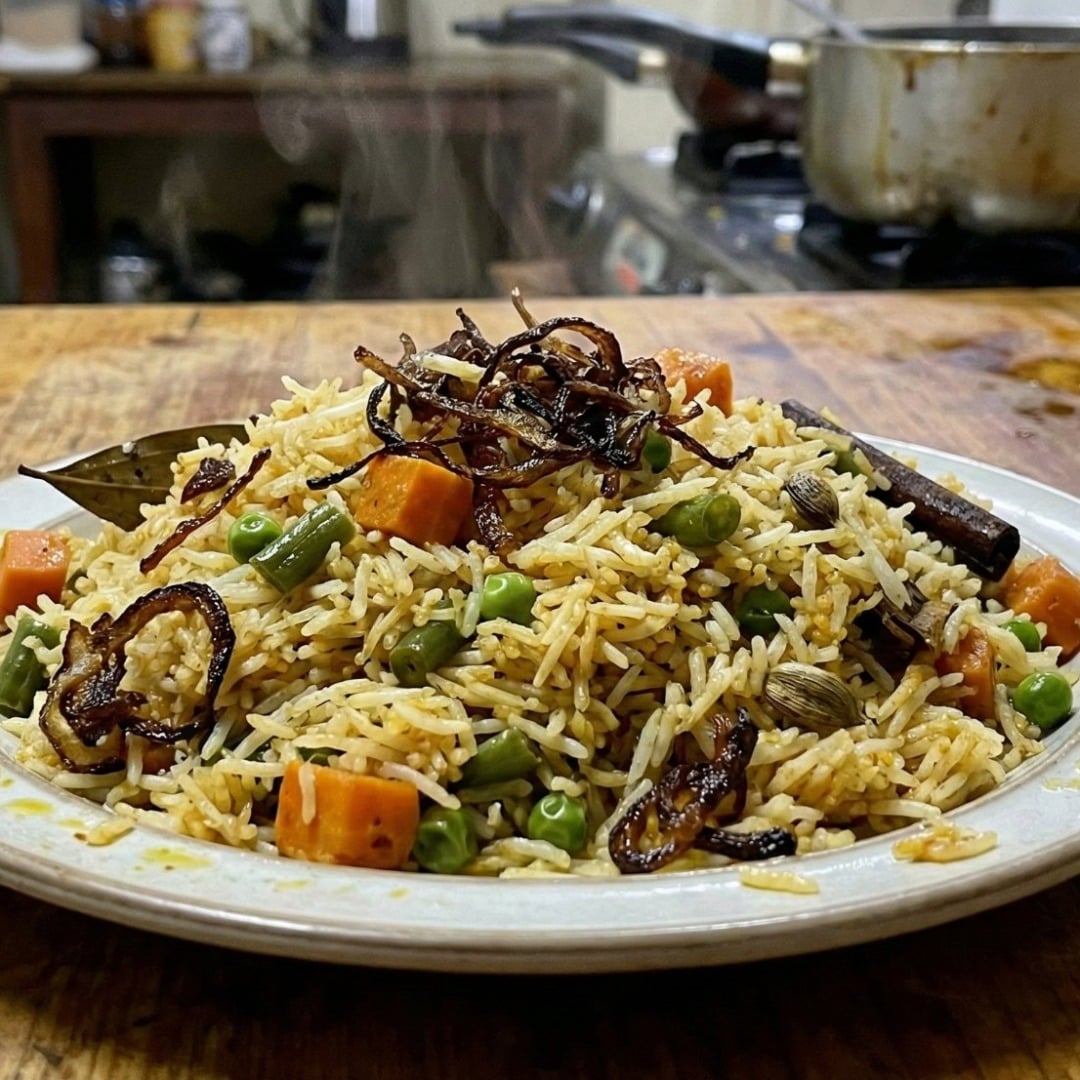
Vegetable Pulao with Fried Onions
simple veg pulao. fried onion garnish is a must
Serving your rice with a curry? Basmati is the rice for the job - see what to serve with butter chicken for the full plate.