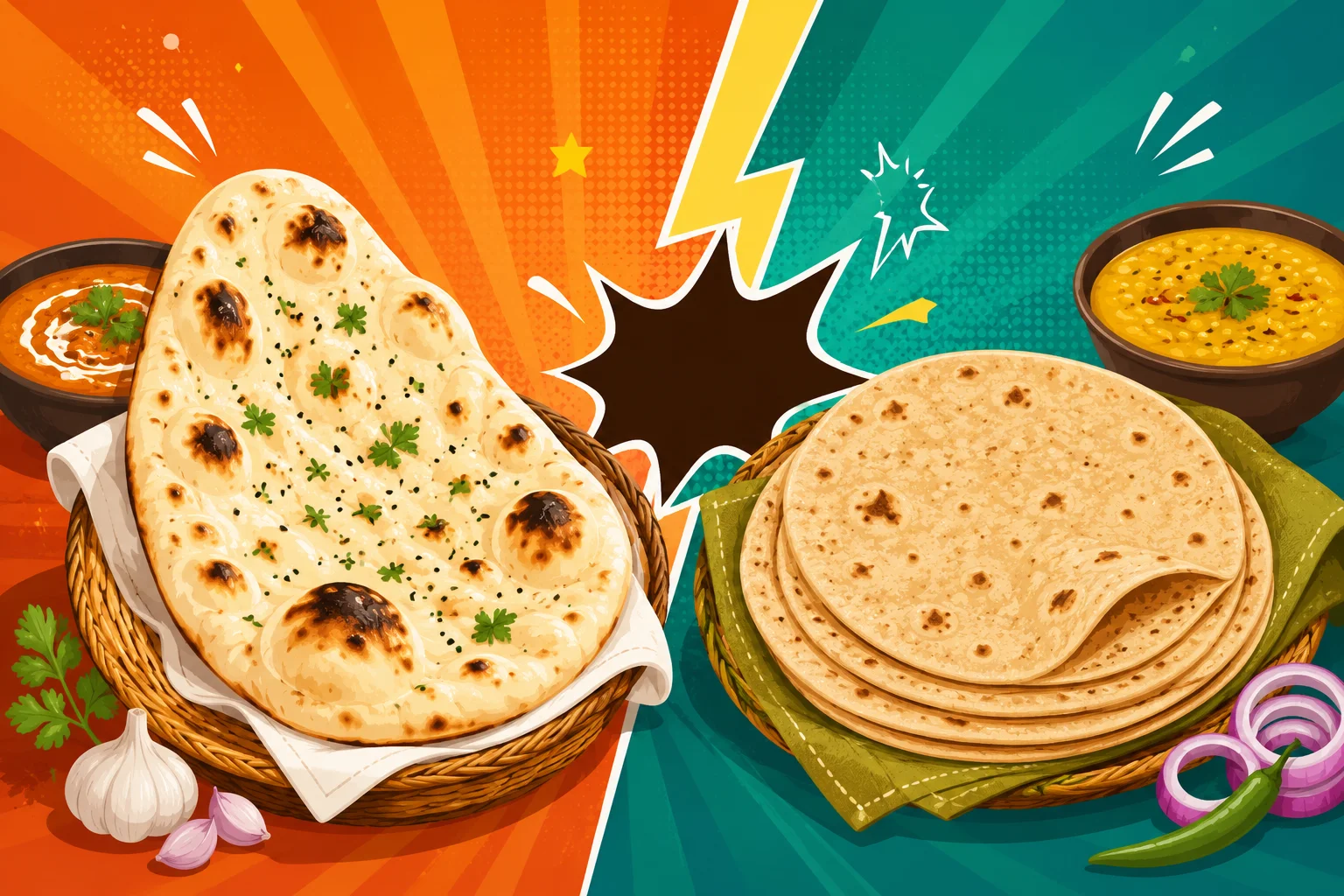
Naan vs Roti: What's the Difference?
 MasalaBear Team
Naan or roti with your curry tonight? One is a rich, leavened restaurant bread; the other is the everyday whole-wheat staple. Here's how they differ and when to use each.
Tip
Order Indian takeout and you'll almost always reach for naan. Eat in an Indian home, and it's roti on the table every single day. They're both flatbreads served with the same curries - so why does one feel like a treat and the other like a staple?
The answer comes down to two things: what they're made from and how they're cooked. Get those, and you'll always know which one belongs with your meal.
At-a-Glance Comparison
| Feature | Naan | Roti (Chapati) |
|---|---|---|
| Flour | Refined white flour (maida) | Whole-wheat flour (atta) |
| Leavened? | Yes (yeast or yogurt) | No |
| Cooked in | Tandoor (clay oven) | Tawa (flat griddle) |
| Texture | Soft, chewy, puffed, blistered | Thin, soft, pliable |
| Added fat | Yogurt, oil, often butter/ghee | None (traditionally) |
| Fiber | Lower | Higher (whole grain) |
| Everyday or treat? | Restaurant / special | Daily staple |
| Shape | Teardrop / oval | Round |
What They're Made Of
This is where the two breads split from the very first step.
Naan: White Flour, Yogurt, and Leavening
Naan is made with maida - finely milled refined white flour. The dough is enriched and leavened, which is what gives naan its signature soft, pillowy chew:
- Maida (white flour) - low in bran, high in stretchy gluten
- Yogurt - adds tang, tenderness, and helps the dough rise
- A leavening agent - yeast, or the natural action of yogurt and baking soda
- Oil or ghee - for softness and richness
- Milk or egg (in some versions) - for extra tenderness
Because the dough is leavened and rested, it develops air pockets that balloon up under high heat. Naan is essentially the indulgent, bakery-style member of the flatbread family.
Roti: Just Whole Wheat and Water
Roti - also called chapati - is beautifully simple. Traditional roti dough has exactly two ingredients:
- Atta (whole-wheat flour) - milled from the whole grain, bran included
- Water - and sometimes a pinch of salt
That's it. No yeast, no yogurt, no fat. The whole-wheat flour is what makes roti nuttier, higher in fiber, and lighter on the stomach. It's the bread you can eat twice a day, every day, without it ever feeling heavy.
How They're Cooked
The cooking method is the second half of the story - and the reason naan and roti look so different on the plate.
Naan Is Baked in a Tandoor
Traditional naan is slapped onto the searing-hot clay wall of a tandoor, where temperatures hit 480°C (900°F). In seconds it puffs, chars, and blisters. The intense, dry heat is what creates those signature dark spots and the smoky flavor you can't quite replicate at home.
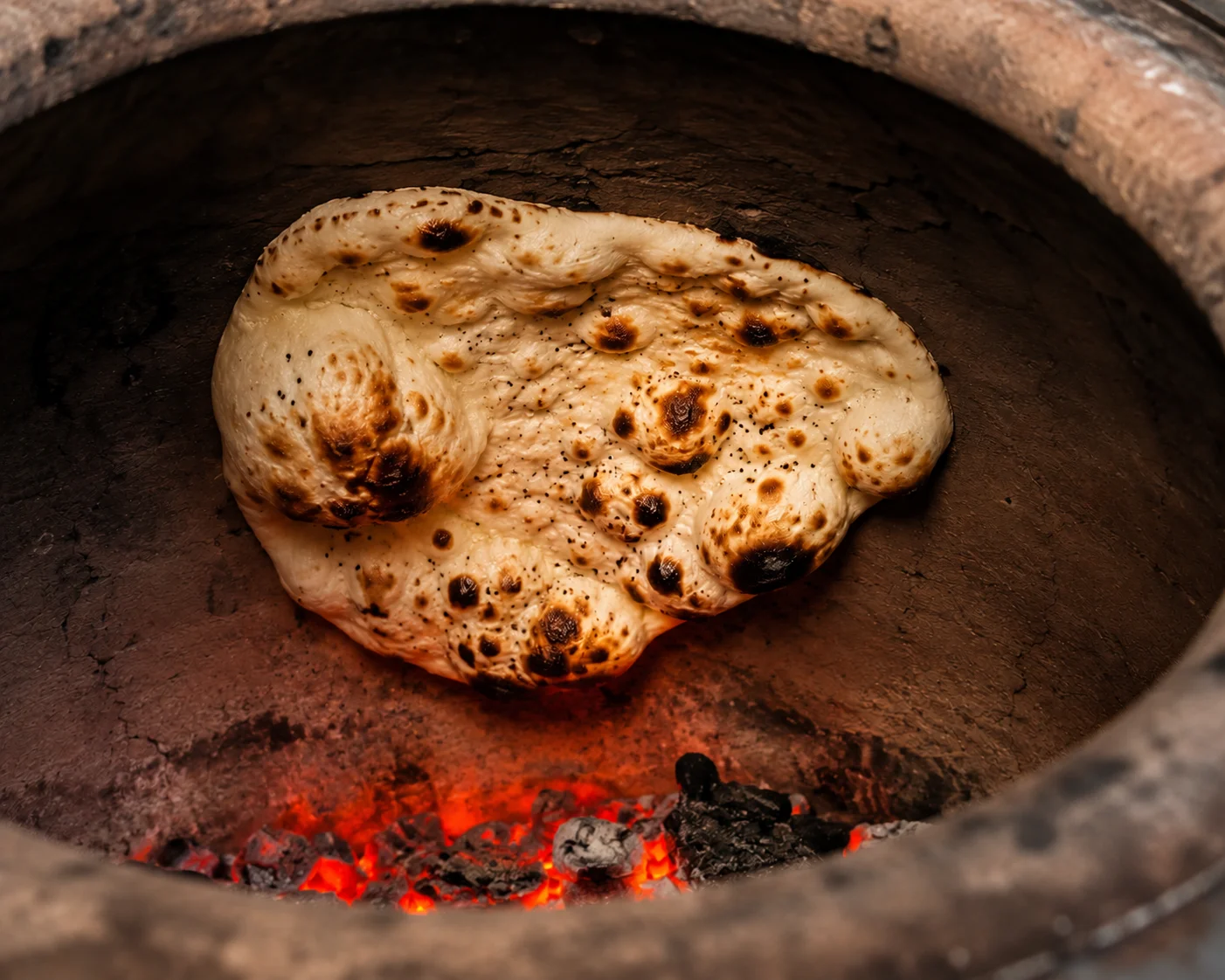 Naan bakes against the clay wall of a tandoor at around 900°F, which gives it those signature blistered char spots
Note
Roti Is Cooked on a Tawa
Roti is rolled thin and cooked on a tawa - a flat, slightly concave griddle. It cooks in about a minute per side, then gets a final few seconds directly over the flame (or pressed with a cloth), where it dramatically puffs into a balloon. That puff is the sign of a perfectly made roti: the steam trapped inside has cooked it through and kept it soft.
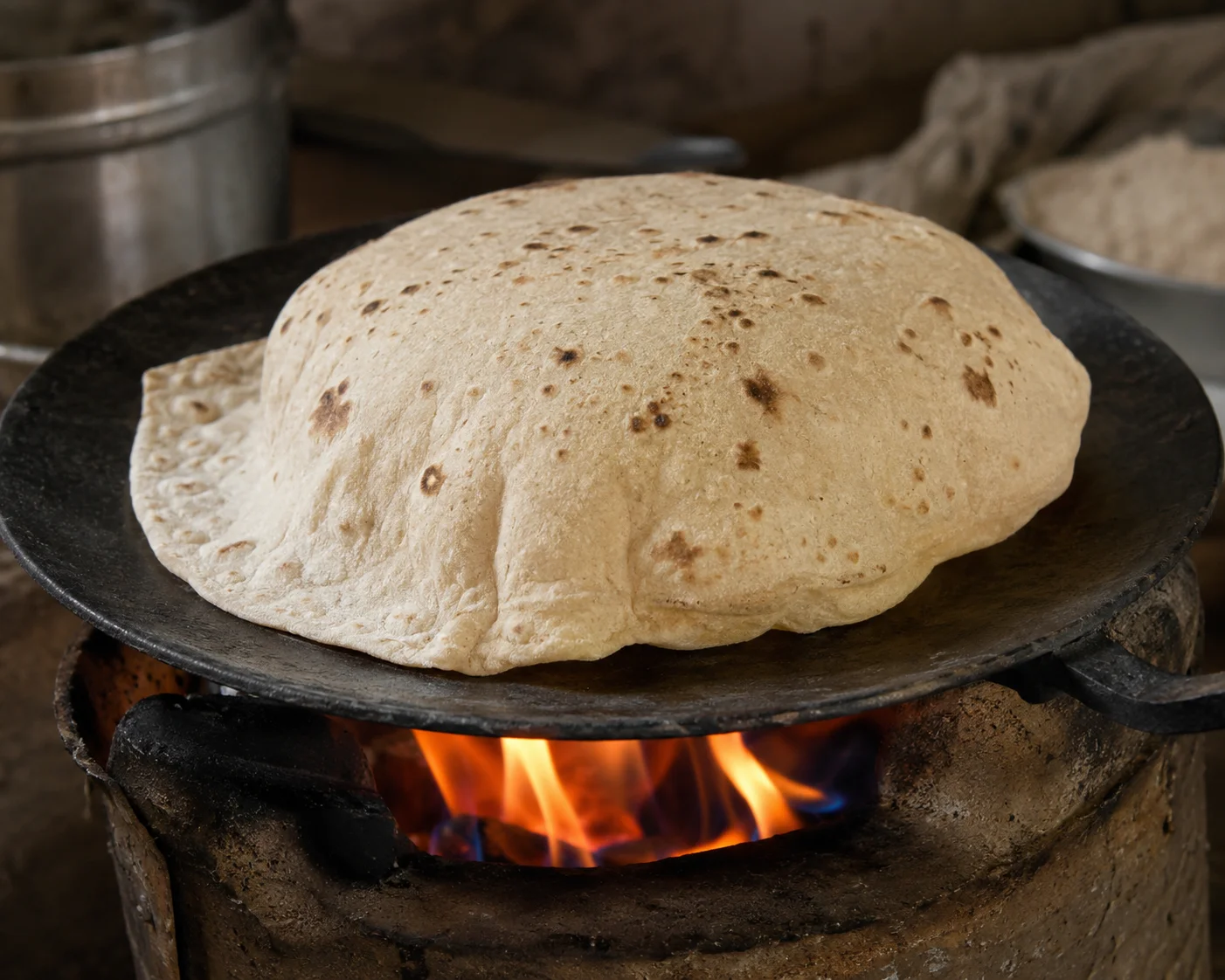 A well-made roti puffs into a balloon over the flame - the steam inside cooks it through and keeps it soft
Regional Styles and Variations
"Naan" and "roti" are really umbrella terms. Across India, each one splinters into dozens of regional versions - here are the ones you're most likely to meet.
Popular Naan Varieties
- Butter naan - brushed with butter or ghee as it comes off the heat
- Garlic naan - studded with minced garlic and coriander
- Keema naan - stuffed with spiced minced meat
- Peshawari / Kashmiri naan - sweet, filled with nuts and dried fruit
- Cheese naan - a molten, indulgent modern favorite
Popular Roti Varieties
- Chapati - the thin, everyday rolled roti (the terms overlap completely)
- Phulka - a smaller, puffier roti cooked directly over the flame
- Tandoori roti - whole-wheat, but baked in a tandoor like naan
- Rumali roti - a paper-thin, handkerchief-style roti
- Missi roti - made with chickpea flour and spices
If you want the full family tree - parathas, theplas, kulchas, puris and more - we mapped all of it in our guide to the types of Indian bread.
Which Is Healthier?
If you're choosing on nutrition alone, roti wins - and it's not particularly close.
Roti is made from whole-wheat flour with no added fat, so it delivers more fiber, keeps you fuller, and has a gentler effect on blood sugar. Naan's refined white flour, yogurt, oil, and butter make it richer, softer, and more calorie-dense - delicious, but firmly in treat territory.
This is the same logic behind eating Indian food the low-carb way: the curry usually isn't the problem, the bread and rice are. We break that down fully in our guide to low-calorie Indian food.
Warning
Which Should You Serve With Your Curry?
Let the curry decide.
Reach for naan when the curry is rich, saucy, and restaurant-style - the kind you want to scoop and soak. Butter chicken, dal makhani, korma, and paneer curries were made for tearing off a piece of warm naan. (If butter chicken is on the menu, we've got a whole guide to what to serve with butter chicken.)
Reach for roti when you're eating everyday home food - dals, dry sabzis, rajma, chole, and simple meat curries. Roti is lighter, doesn't compete with the food, and is what most Indian families actually eat with these dishes night after night.
Not sure what half these dishes are? Our butter chicken vs tikka masala breakdown is a good place to start, and you can browse every recipe on the bread & roti category page.
Make Them at Home
Both breads are within reach of any home cook - here are two MasalaBear recipes to start with, one from each side of the comparison.
 Medium
Featured Recipe
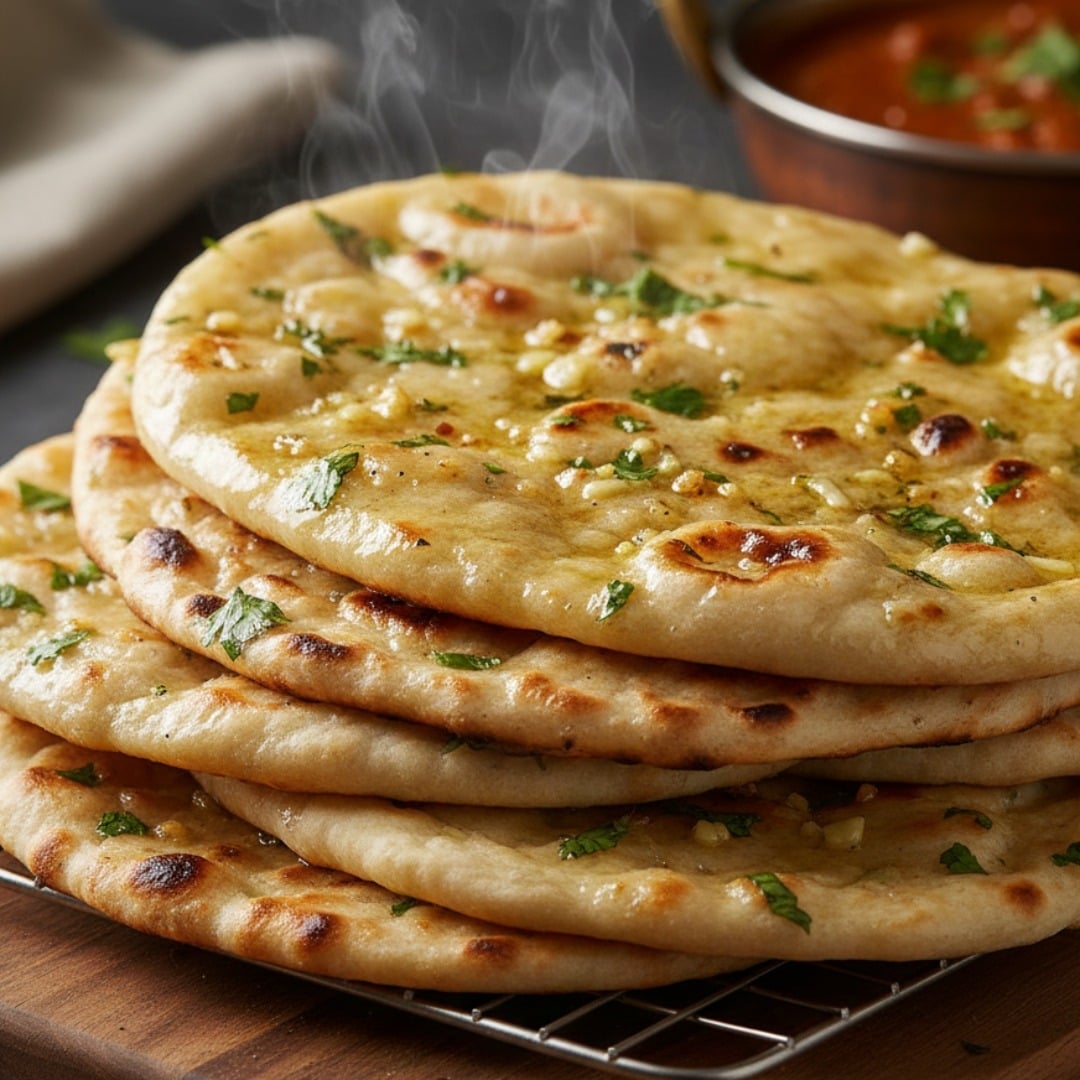
Garlic Butter Naan (Tawa Style, No Oven)
Who needs a tandoor when you have a Tawa? This recipe gives you restaurant-quality soft, chewy Garlic Butter Naan right on your stovetop. The trick is to use a slightly wet dough and steam it over the flame for that perfect char.
Soft, blistered garlic butter naan you can make on a tawa - no tandoor, no oven required.
 Medium
Featured Recipe
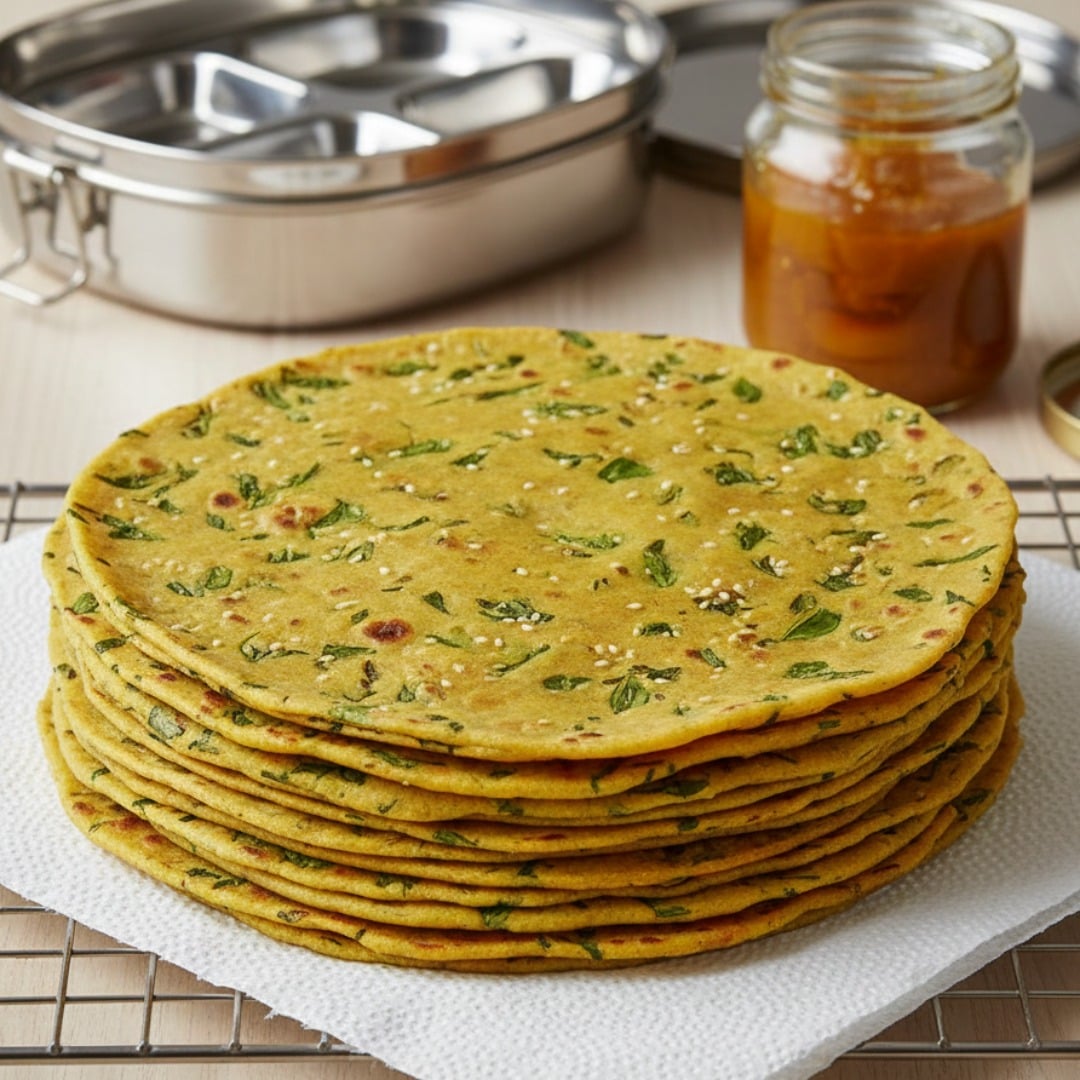
Methi Thepla (The Official Indian Travel Food)
These fenugreek flatbreads stay fresh for days. Essential for any train journey, flight, or picnic. Serve with sweet mango pickle.
Thepla is a roti-family whole-wheat flatbread - a great way to get comfortable rolling and cooking on a tawa before you move on to plain phulka.
The Bottom Line
Naan and roti answer to the same curries but come from completely different places.
Naan is leavened, made from white flour, enriched with yogurt and fat, and baked in a blazing tandoor. It's soft, chewy, indulgent - the restaurant bread.
Roti is unleavened, made from whole wheat and water, and cooked on a simple tawa. It's thin, light, higher in fiber - the everyday staple.
Learn to make both, and you'll have the right bread for every meal: naan for the treat nights, roti for all the rest.
Frequently Asked Questions
- Is naan healthier than roti?
- No. Roti is the healthier choice. It's made from whole-wheat flour (atta) with no added fat or leavening, so it's higher in fiber and lower in calories. Naan uses refined white flour (maida) plus yogurt, oil, and often butter, making it richer and more calorie-dense.
- What is the main difference between naan and roti?
- Leavening and flour. Naan is leavened (with yeast or yogurt) and made from refined white flour, giving it a soft, chewy, puffed texture. Roti is unleavened and made from whole-wheat flour, giving it a thin, soft, everyday texture. Naan is baked in a tandoor; roti is cooked on a flat tawa.
- Are roti and chapati the same thing?
- Essentially yes. Chapati is a type of roti - the words are used interchangeably for the thin, unleavened whole-wheat flatbread cooked on a tawa. 'Roti' is the broader term for Indian flatbreads, while 'chapati' refers specifically to the everyday rolled version.
- Can I make naan without a tandoor?
- Yes. A very hot cast-iron tawa or skillet gives you a great stovetop naan - cook it covered so the top steams and puffs, or finish it directly over a flame for char. You won't get the exact tandoor smokiness, but the texture comes out close.
- Why is naan chewier than roti?
- Gluten and leavening. Naan's refined white flour develops more stretchy gluten, and the yeast or yogurt creates air pockets that puff up in the tandoor's high heat. Roti's whole-wheat flour and lack of leavening make it thinner and softer rather than chewy.
- Which bread should I serve with curry?
- Both work, but pick by the curry. Rich, saucy restaurant-style curries like butter chicken pair beautifully with naan for scooping. Everyday home curries, dals, and dry sabzis are traditionally eaten with roti, which is lighter and lets the food shine.