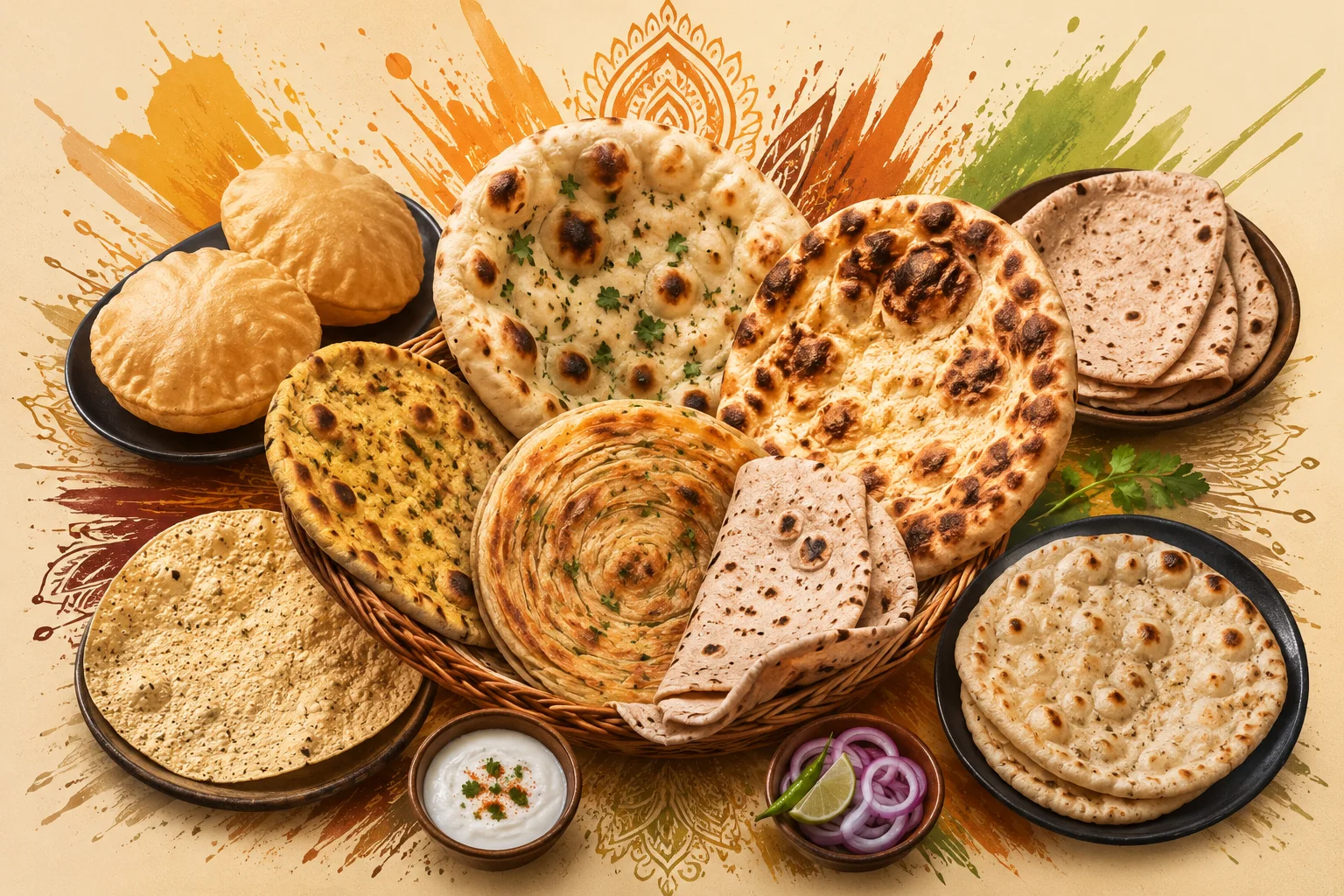
Types of Indian Bread: 15 You Should Know
 MasalaBear Team
Naan is just the beginning. From everyday roti to flaky paratha, puffy bhatura, and crispy dosa, here are the types of Indian bread - what they are, how they're made, and how to eat them.
Tip
Ask most people to name an Indian bread and you'll hear "naan" - maybe "roti" if they've eaten in an Indian home. But India has an entire universe of breads: puffed, layered, stuffed, deep-fried, fermented, griddled, and baked. Some you eat every day; some appear only at feasts.
Here's the full map - organized by how they're made - so you can tell your phulka from your paratha and your bhatura from your bhakri.
Indian Bread at a Glance
| Family | Examples | Cooked On | Leavened? |
|---|---|---|---|
| Tawa breads | Roti, chapati, phulka | Flat griddle | No |
| Tandoor breads | Naan, kulcha, tandoori roti | Clay oven | Naan/kulcha: yes |
| Deep-fried | Puri, bhatura, luchi | Hot oil | Bhatura: yes |
| Stuffed/layered | Paratha, thepla, missi roti | Flat griddle | No |
| Rice/lentil | Dosa, appam, uttapam | Griddle | Fermented |
The Families of Indian Bread
1. Tawa Breads (The Everyday Staples)
Cooked on a flat or slightly concave griddle called a tawa, these unleavened whole-wheat breads are what most Indians actually eat at home, every single day.
- Roti / Chapati - the thin, round, unleavened staple (the two words are used interchangeably)
- Phulka - a smaller roti finished directly over the flame so it puffs into a ball
- Bhakri - a thicker, rustic griddle bread from Maharashtra and Gujarat, often millet-based
If you want the deep dive on how these differ from restaurant bread, our naan vs roti comparison covers the flour, leavening, and cooking differences in detail.
2. Tandoor Breads (The Restaurant Favorites)
Baked against the searing clay wall of a tandoor, these are the chewy, blistered breads you know from restaurants.
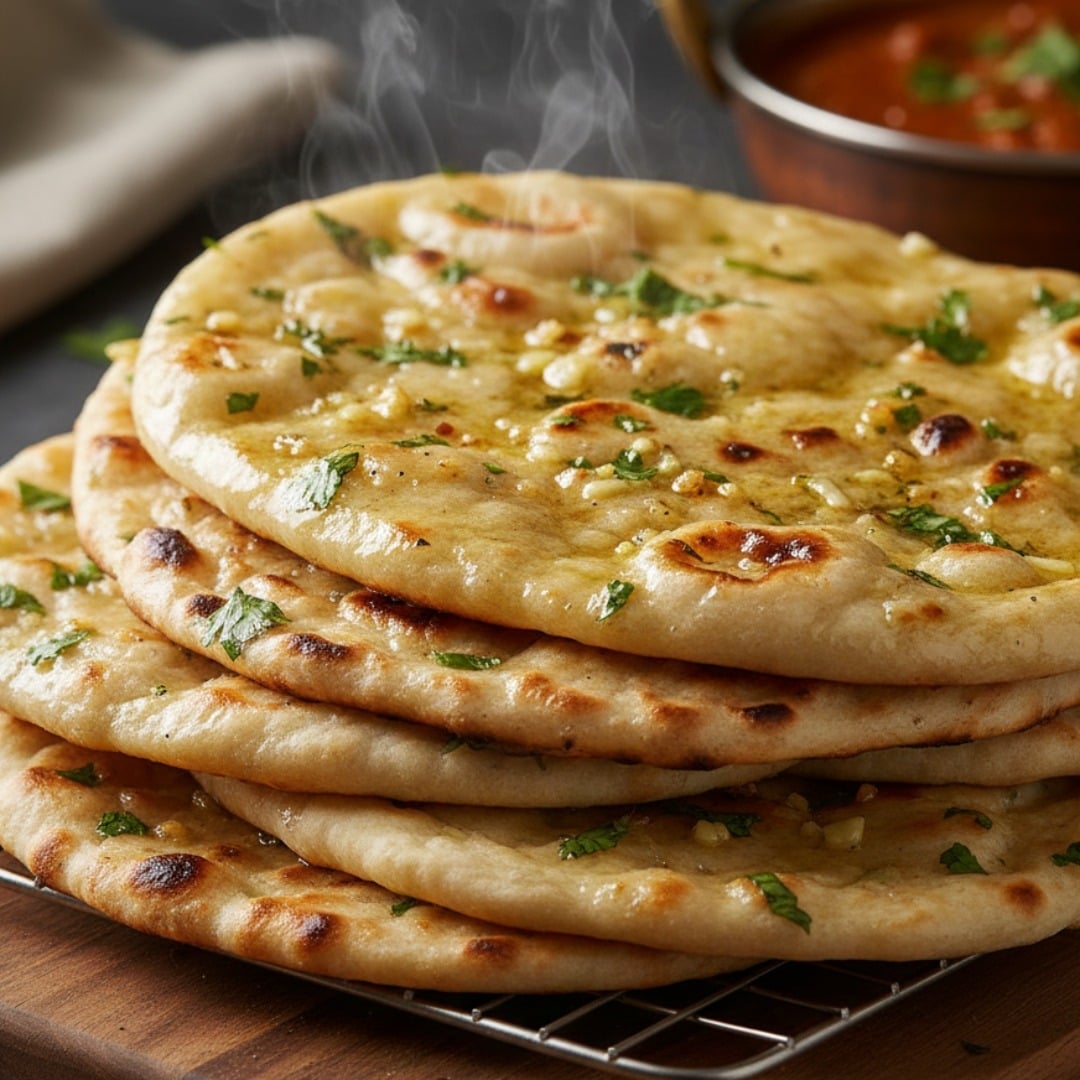
- Naan - leavened, made from refined white flour with yogurt; soft and chewy
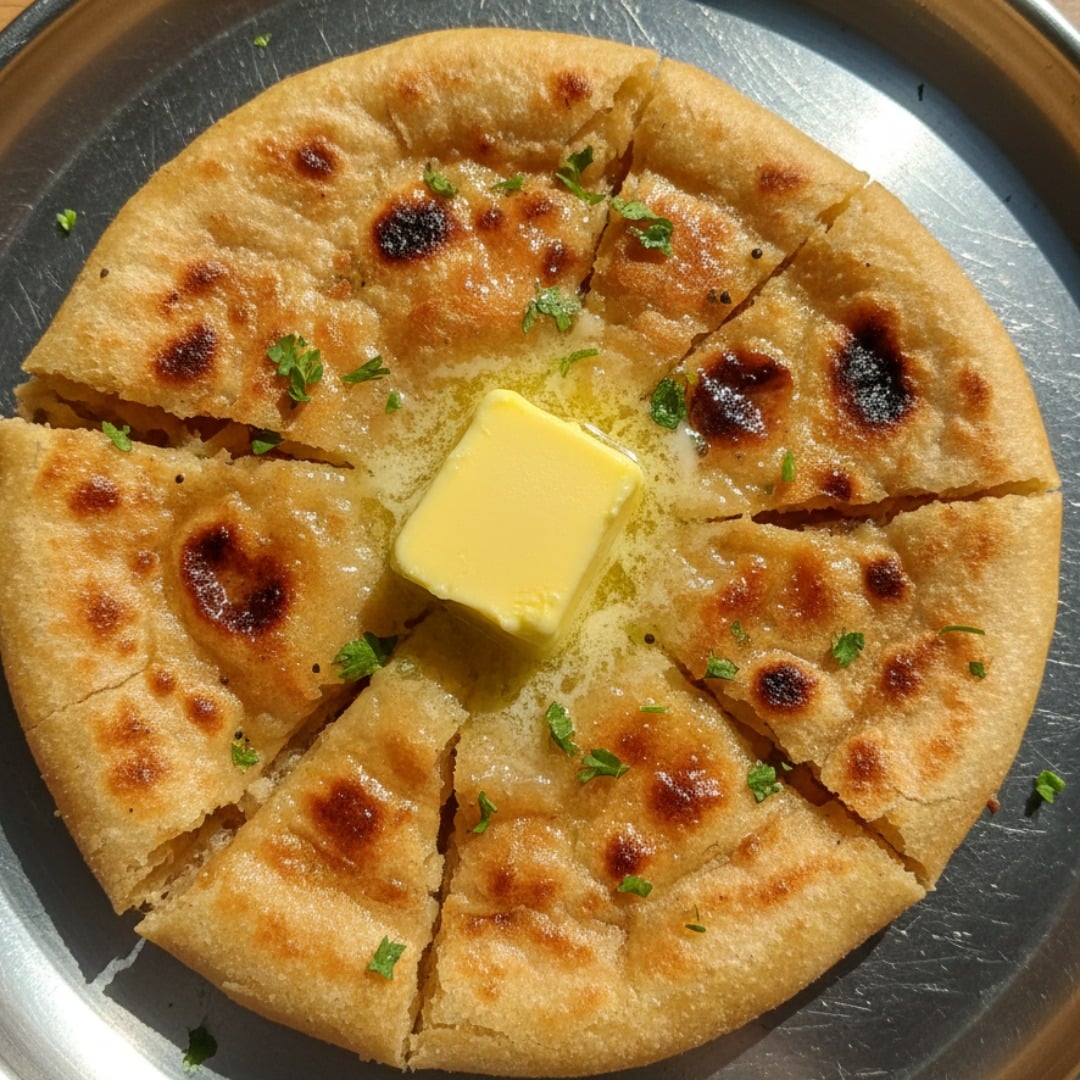
- Kulcha - a leavened bread often stuffed with onion, potato, or paneer
- Tandoori roti - whole-wheat like a roti, but baked in the tandoor for extra chew
 Medium
Featured Recipe
Garlic Butter Naan (Tawa Style, No Oven)
Who needs a tandoor when you have a Tawa? This recipe gives you restaurant-quality soft, chewy Garlic Butter Naan right on your stovetop. The trick is to use a slightly wet dough and steam it over the flame for that perfect char.
 Hard
HardFeatured Recipe
Amritsari Kulcha (My Tawa Hack Version)
You don't need a tandoor for this! Crispy on the outside, soft on the inside, stuffed with spicy potatoes. The inverted tawa trick works wonders.
3. Deep-Fried Breads (The Indulgent Ones)
Fried in hot oil until they balloon and turn golden - reserved for feasts, weekends, and special breakfasts.
- Puri - a small, puffed, deep-fried whole-wheat bread
- Bhatura - a large, leavened, fluffy fried bread, the classic partner to chole
- Luchi - the Bengali version of puri, made with white flour
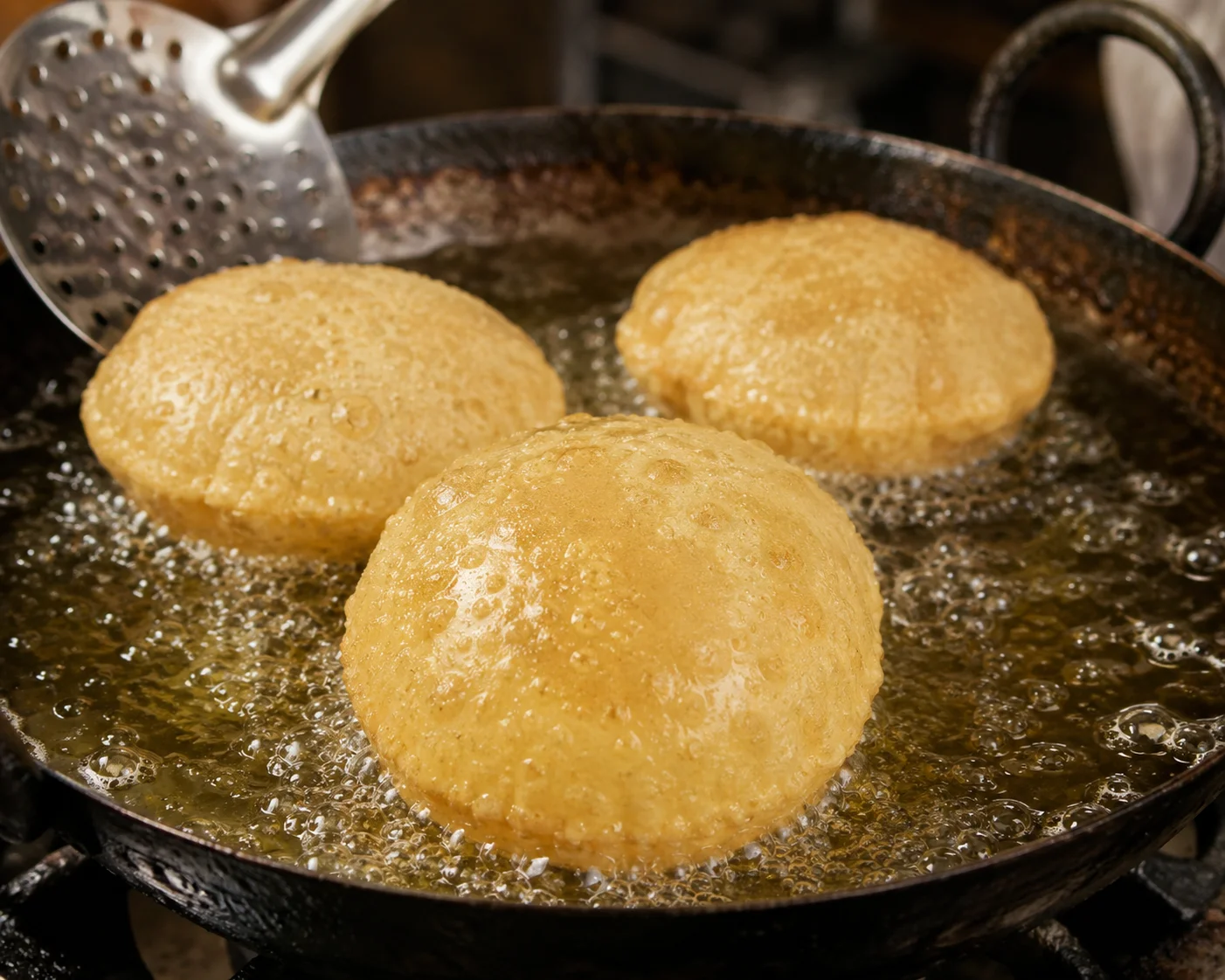 Puri and its cousins balloon dramatically when they hit hot oil - a feast-day favorite
4. Stuffed and Layered Flatbreads (The Hearty Ones)
Rolled with fat, folded for flakiness, or stuffed with a filling - these breads are practically a meal on their own.
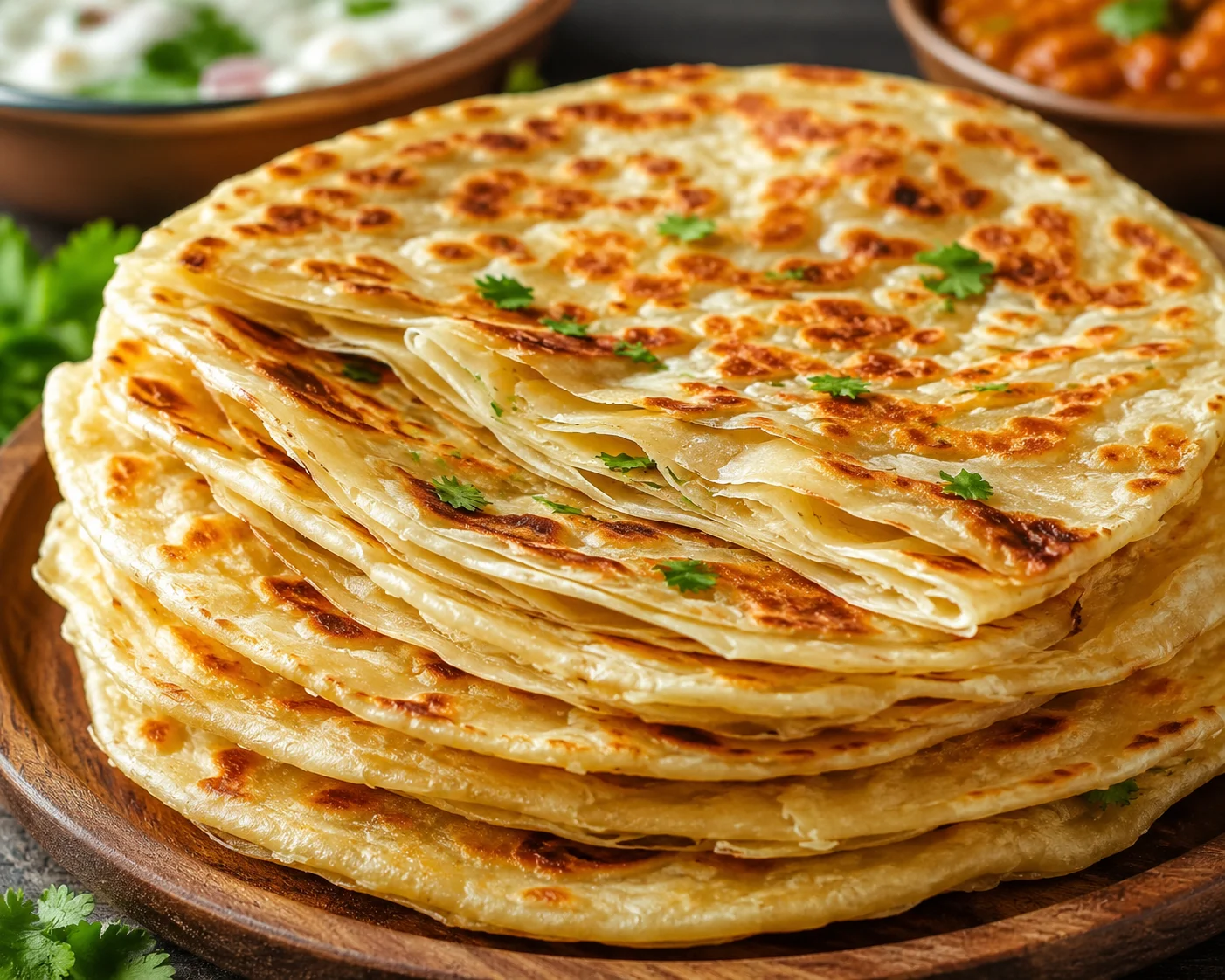 Parathas get their flaky layers from folding fat into the dough before rolling and pan-frying
- Paratha - flaky, layered, pan-fried; plain or stuffed (aloo, gobi, paneer)
- Thepla - a thin, spiced Gujarati flatbread made with fenugreek; a legendary travel food
- Missi roti - made with chickpea flour (besan) and spices
- Lachha paratha - a multi-layered, ruffled paratha
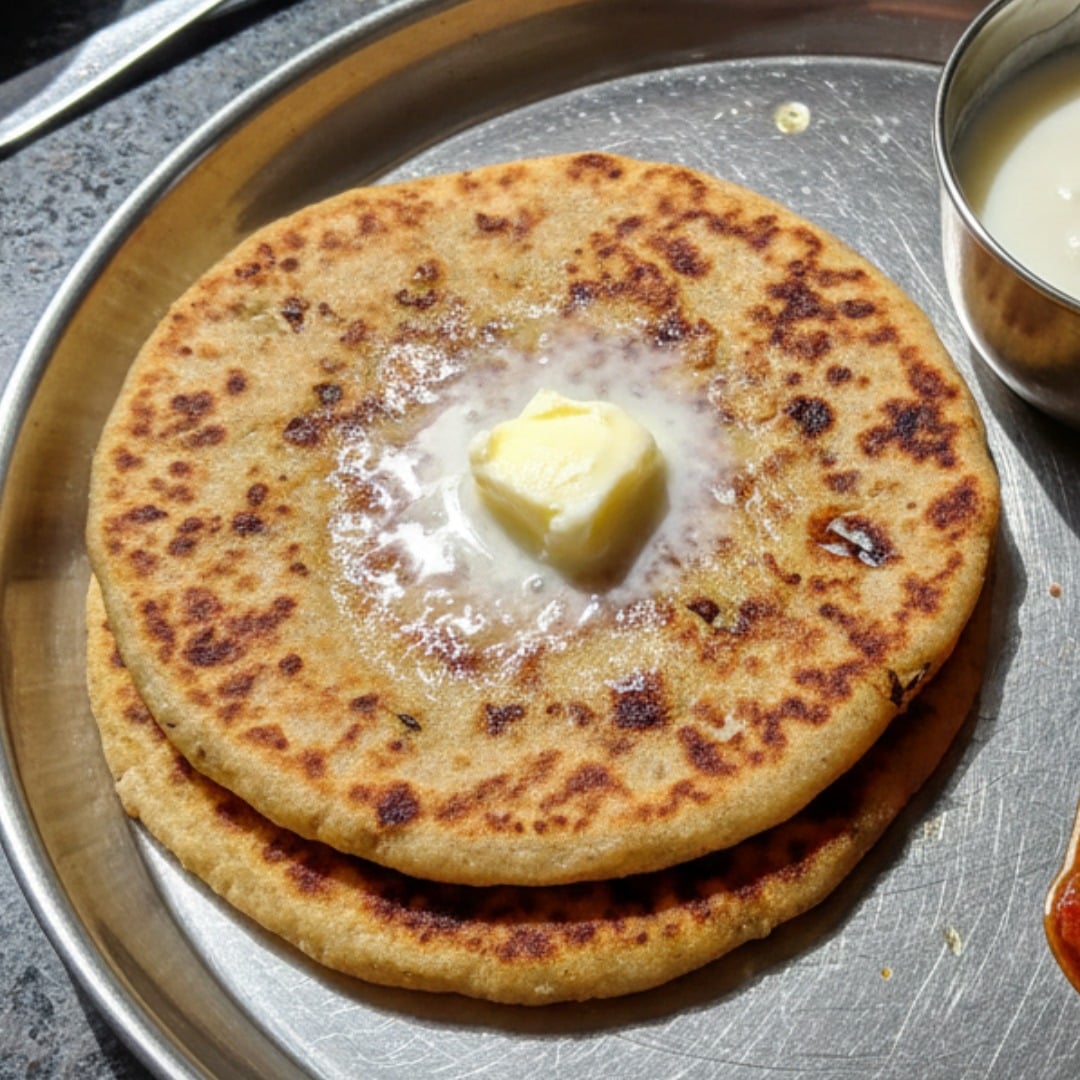 Medium
Featured Recipe
Mom's Aloo Paratha (No Bursting!)
My mom's recipe. The trick is to cool the potato mixture completely before stuffing, otherwise the dough tears and it's a mess.
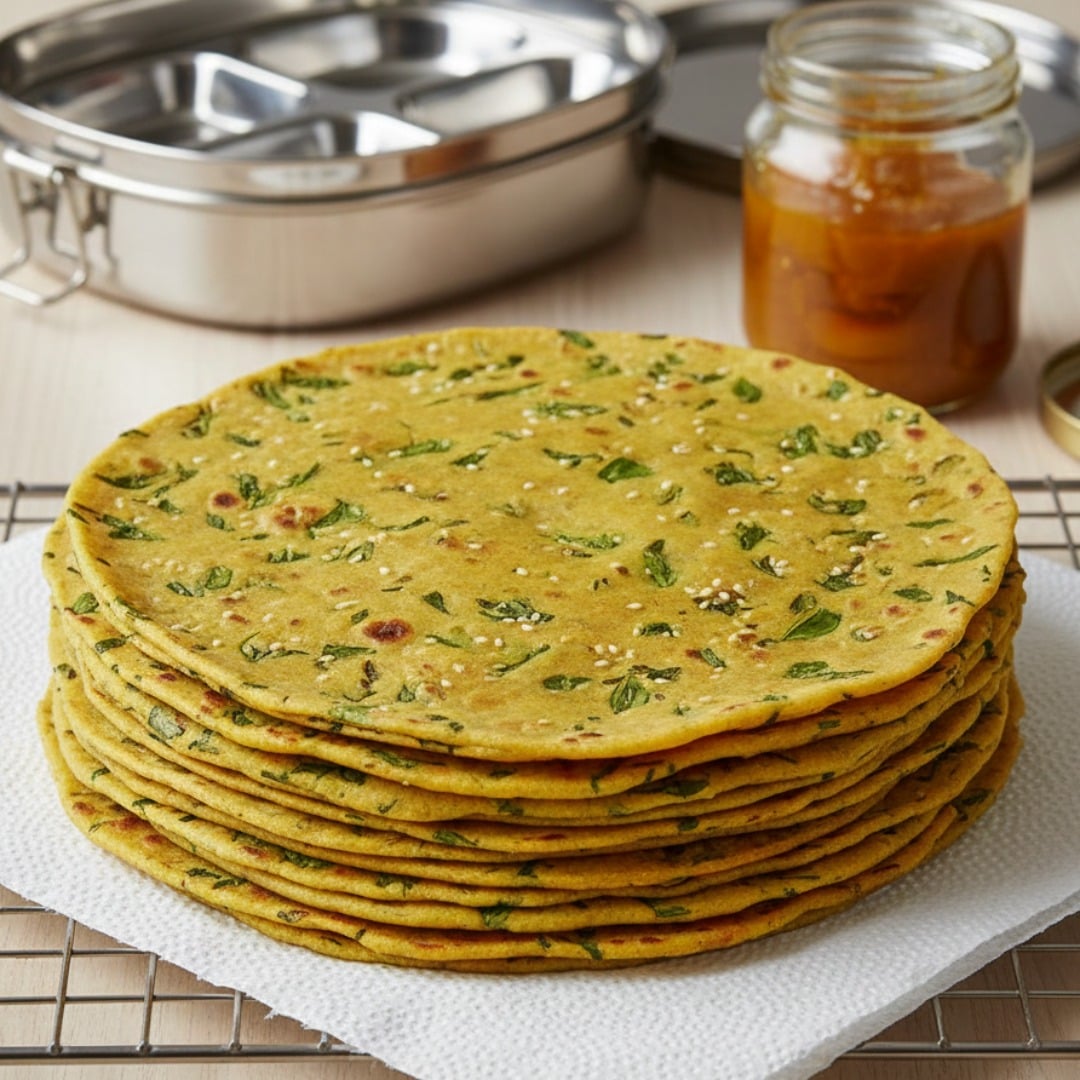 Medium
Featured Recipe
Methi Thepla (The Official Indian Travel Food)
These fenugreek flatbreads stay fresh for days. Essential for any train journey, flight, or picnic. Serve with sweet mango pickle.
5. Rice and Lentil Breads (The South Indian Staples)
Made not from wheat but from a fermented rice-and-lentil batter, these are the daily breads of South India - and naturally gluten-free.
- Dosa - a large, thin, crispy fermented crepe
- Appam - a soft, lacy, bowl-shaped pancake with a fluffy center
- Uttapam - a thicker, softer dosa topped with vegetables
Regional Signatures
Beyond the families, each region has a bread it calls its own:
- Punjab - makki di roti (cornbread), eaten with sarson ka saag
- Gujarat - thepla and bhakri, built for travel and shelf life
- Bengal - luchi, the delicate white-flour puri
- South India - dosa, appam, and uttapam from fermented batter
- Rajasthan - bajra roti (pearl millet), rustic and hearty
Note
Which Bread Goes With What?
The bread you choose depends on the meal:
- Rich, saucy curries (butter chicken, dal makhani, korma) → naan for scooping. See our full guide to what to serve with butter chicken.
- Everyday dals and dry sabzis → roti or phulka, light and unfussy
- Chole (chickpea curry) → bhatura, the iconic chole-bhature pairing
- A saag or greens dish → makki di roti or naan; see saag paneer vs palak paneer
- Breakfast or a solo meal → a stuffed paratha, hearty enough to stand alone
Browse and cook any of these on the bread & roti category page.
Making Indian Bread at Home
You don't need a tandoor to start. The most beginner-friendly breads:
- Roti / phulka - just atta and water; the fundamental skill
- Paratha - forgiving, and stuffing hides imperfect rolling
- Thepla - spiced dough that's flexible and travel-hardy
- Naan on a tawa - a hot skillet plus a flame gets you surprisingly close to tandoor texture
Master roti first - once you can roll and puff a phulka, every other bread on this list becomes easier.
The Bottom Line
Indian bread is a whole culinary category, not a single item on a menu.
Learn the five families - tawa breads for every day, tandoor breads for indulgence, deep-fried breads for feasts, stuffed breads for hearty meals, and rice-and-lentil breads for the South - and you'll understand not just what to order, but why each one exists and what it belongs with. Start with roti, work your way to naan, and you'll never look at "Indian bread" as just naan again.
Frequently Asked Questions
- What are the main types of Indian bread?
- Indian breads group into five families: unleavened tawa breads (roti, chapati, phulka), leavened tandoor breads (naan, kulcha), deep-fried breads (puri, bhatura), stuffed and layered flatbreads (paratha, thepla), and rice- or lentil-based breads (dosa, appam). Most are wheat-based and made fresh for each meal.
- What is the most common Indian bread?
- Roti (also called chapati) is by far the most common. It's the everyday, unleavened whole-wheat flatbread cooked on a tawa and eaten with nearly every home-cooked meal across North and Central India - typically twice a day.
- What is the difference between naan and other Indian breads?
- Naan is one of the few Indian breads that's leavened (with yeast or yogurt) and made from refined white flour, then baked in a tandoor. Most everyday Indian breads like roti and chapati are unleavened, made from whole wheat, and cooked on a flat griddle.
- Which Indian bread is the healthiest?
- Plain roti or phulka is the healthiest - whole-wheat flour, no added fat, and no deep-frying. Missi roti and bajra/jowar rotis (millet-based) are also very nutritious. The least healthy are deep-fried breads like puri and bhatura, and rich, layered parathas.
- Is dosa considered a bread?
- Dosa is usually called a crepe or pancake rather than a bread, but it fills the same role - a staple made from a fermented rice-and-lentil batter, cooked on a griddle, and eaten to scoop up other food. It's the classic bread-like staple of South India.
- What Indian bread is gluten-free?
- Several. Dosa and appam are made from rice and lentils, and breads like bajra roti, jowar roti, and makki di roti are made from millet or corn flour - all naturally gluten-free. Wheat-based breads like roti, naan, and paratha are not.