Pani Puri Water: A Regional Guide to India's Most Loved Street Snack
 MasalaBear Team
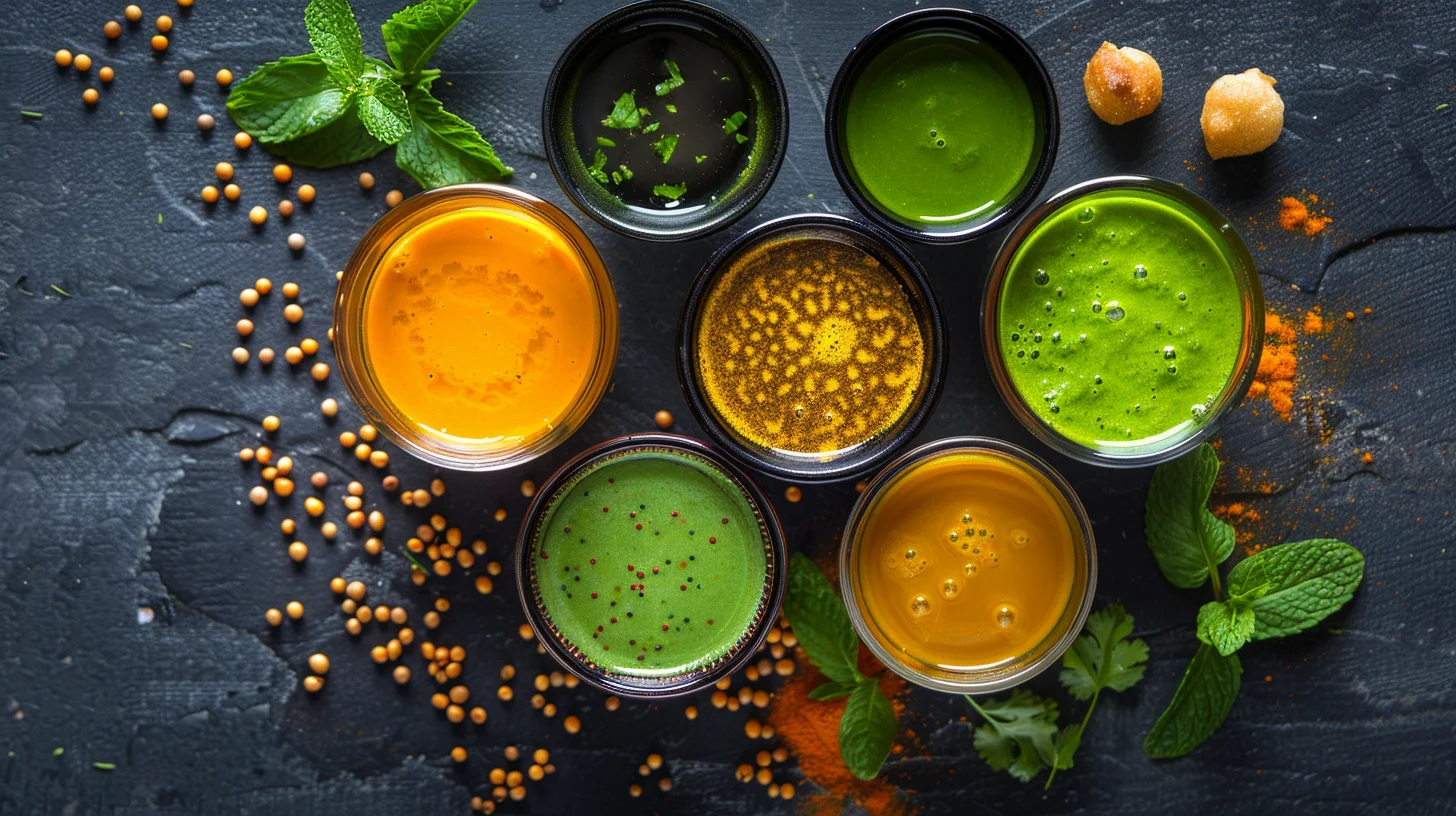
From Mumbai's minty teekha to Kolkata's sweet-tangy phuchka water, pani puri water changes personality across India. A regional guide to the spiced waters that make the snack.
Pani puri isn't the puri. It's the water.
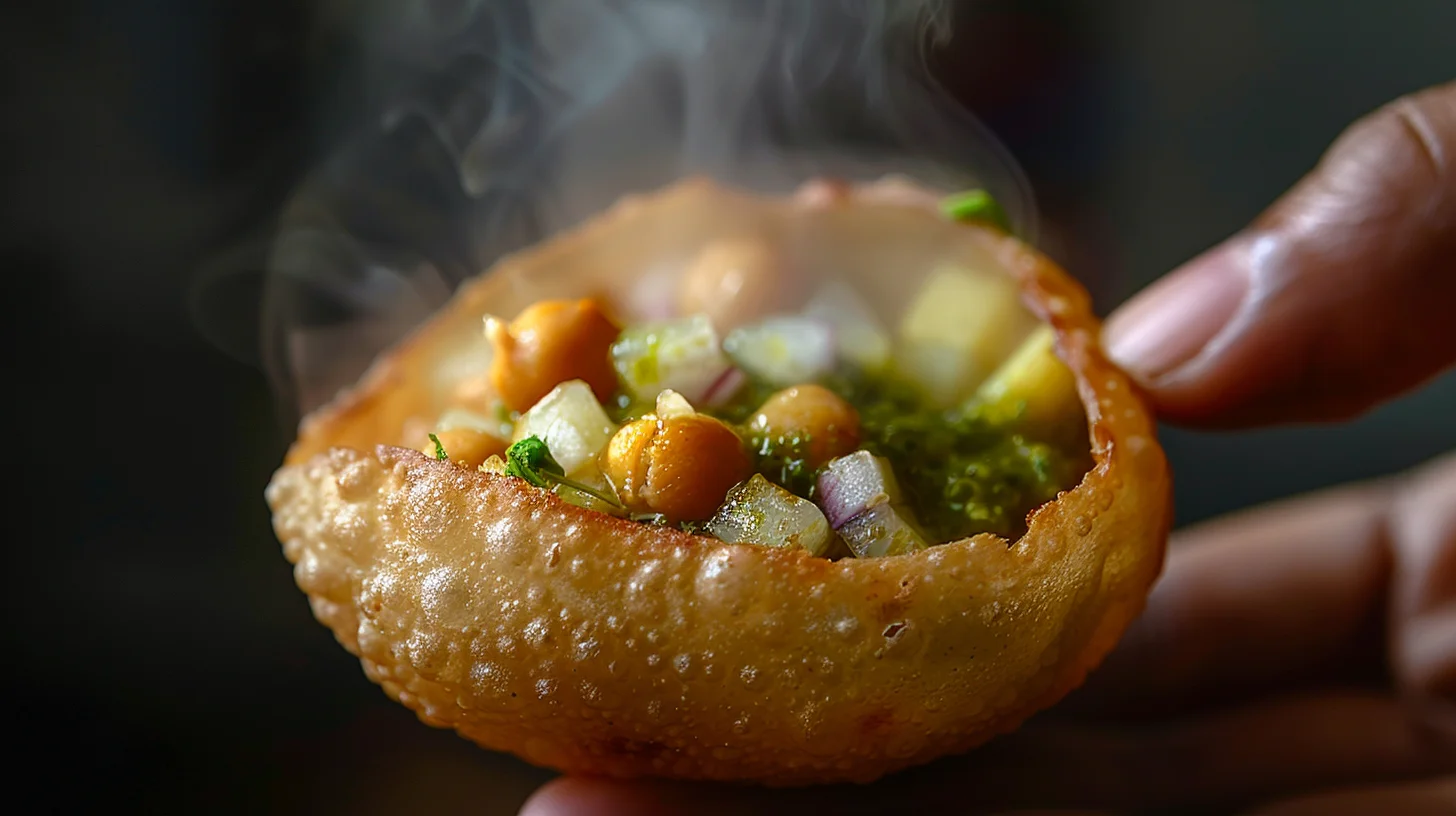
Every Indian who grew up on chaat knows this intuitively. The crisp shell is a vehicle, the boiled potato and chickpea filling is a bed — but the water is the event. That single cold explosion of mint, tamarind, cumin, and chili hitting your tongue is what makes a good pani puri a memory and a great one a religion.
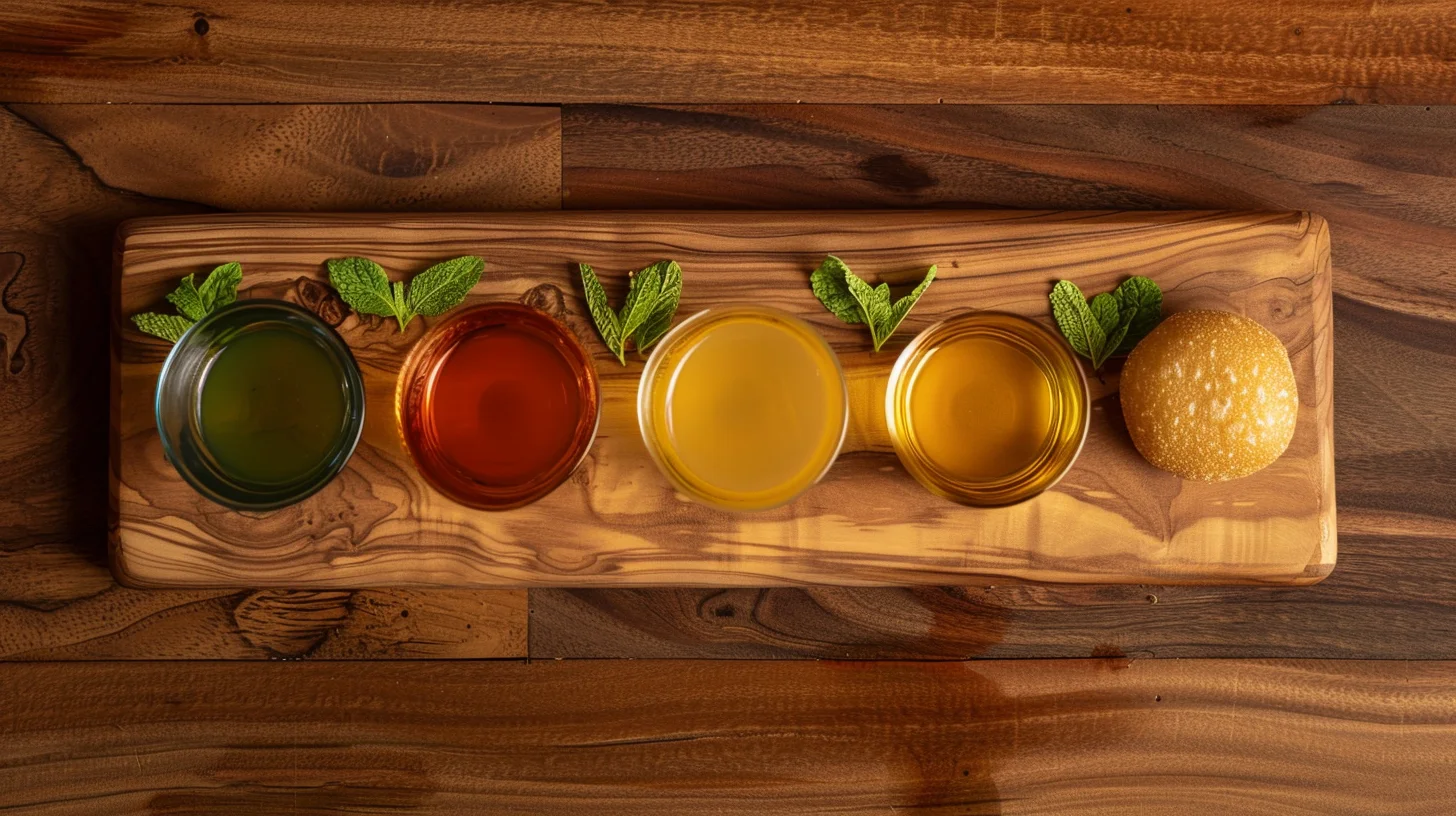
And here's what most home cooks miss: there isn't one pani puri water. Cross state lines and the water changes personality completely. A Kolkata phuchka-wallah and a Mumbai chaat cart are serving the same snack on paper, but the water in each tells you exactly which city you're standing in.
Tip
The anatomy of pani puri water
Before we split into regions, understand what every pani puri water is trying to do. The water has to deliver four sensations in one mouthful:
- Cold shock — it should be aggressively chilled, often over ice. Temperature is as important as flavor.
- Aromatic hit — fresh herbs (mint dominant, coriander supporting) deliver the opening note.
- Sour-salt tang — tamarind or amchur plus black salt carry the middle.
- Slow heat — green chili and roasted cumin linger on the back of the tongue.
Every regional variation rebalances these four. Nobody drops a dimension entirely — they just turn the dials up or down.
Regional styles of pani puri water
1. Mumbai — Teekha pani (the minty green one)
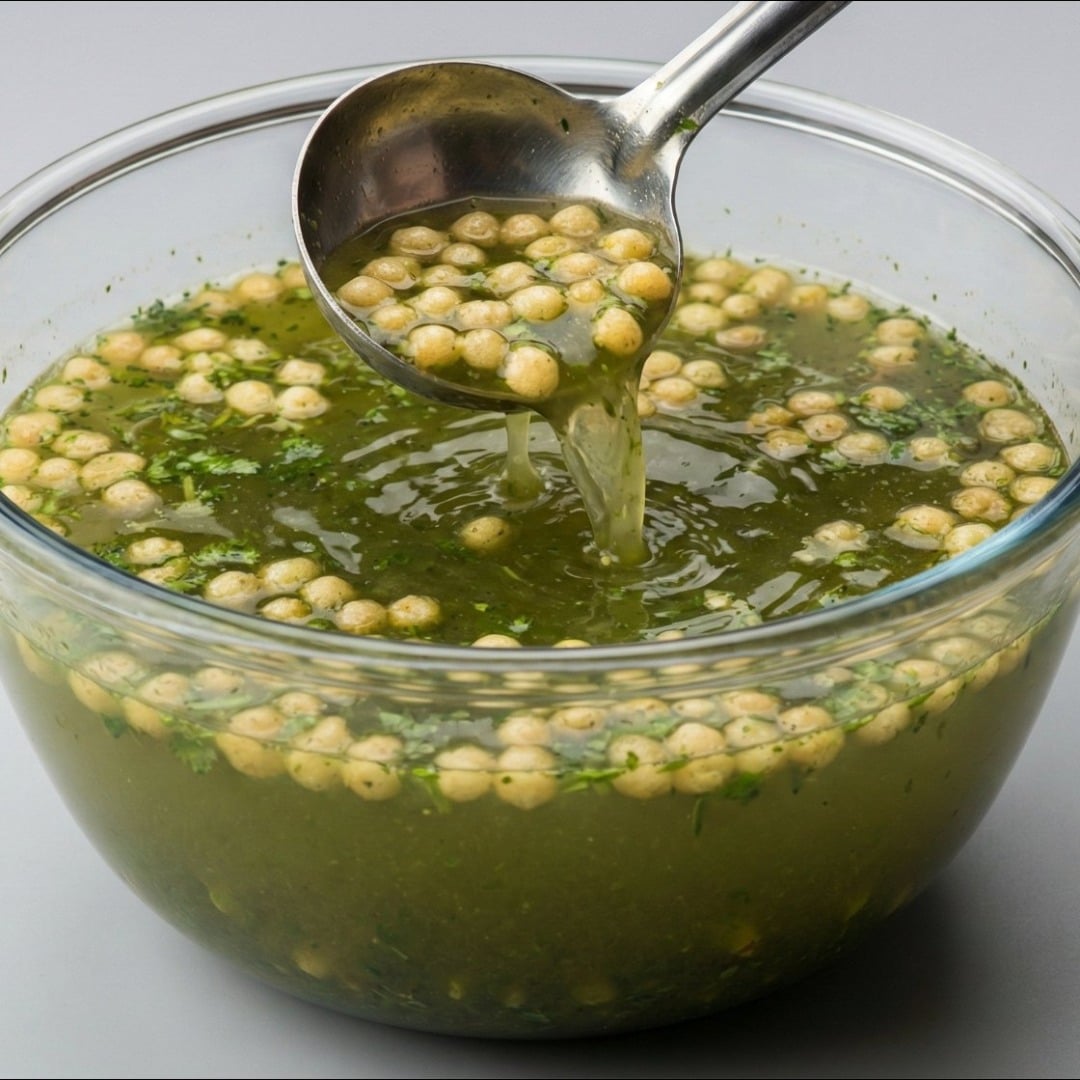
The Mumbai chaat cart standard is a sharply minty, aggressively spicy green water. Mint leads the aroma, coriander supports, green chili brings the heat, and tamarind stays subtle — you want the herbs to dominate. It's served with a second smaller pot of sweet meetha chutney (tamarind-jaggery) that the customer can mix in if they want balance.
The ratio is roughly 3:1 mint to coriander, heavy on ginger, and chilled to the point of brain-freeze. If you're at a stall and the vendor asks "teekha ya meetha?" — this is the teekha answer.
 Easy
EasyFeatured Recipe
Roadside Style Pani Puri Water
I measured everything to get that exact tang and spice of Delhi streets. You need fresh mint and lots of black salt.
2. Delhi / Punjab — Khatta-meetha gol gappa pani
Delhi doesn't pick a side. The classic North Indian gol gappa cart serves two waters side by side — the khatta-teekha (sour-spicy) mint water in one pot and a thicker meetha (sweet tamarind-jaggery) water in another. The customer gets a puri dunked in one or the other by request, or a mixed splash of both.
The sour-spicy water here is slightly less mint-dominant than Mumbai's — more cumin, more black salt, more hing (asafoetida). The sweet water leans heavier on jaggery than tamarind, and often has chironji or melon seeds floating in it.
3. Banaras — Tamarind-heavy, jaggery-rounded
Banarasi pani puri water is darker, heavier, and sweeter than most. Tamarind is the base note rather than mint, and jaggery rounds out the sour edge into something almost caramelized. The shells themselves are usually sooji (semolina) rather than atta, giving a harder crunch that stands up to the thicker water.
The heat comes from dry-roasted red chili rather than fresh green, which gives a toastier, less grassy burn.
4. Hyderabad — Sweet-sour balance with a citrus edge
Hyderabadi style leans into fresh lime rather than just tamarind for the sour component, and often incorporates a bit of mango powder (amchur) for fruit-forward brightness. The sweet note is gentler than Banaras — more like a hint of jaggery than a dominant character.
It's also usually slightly less green — Hyderabadi vendors often dial back the mint and lean on cilantro, giving the water a more yellow-green hue.
5. Kolkata — Phuchka water (the tangy one)
Phuchka — the Bengali name for the same snack — has its own water identity. It's sharply tangy with tamarind and kala namak, often with a bite of raw mustard oil that's characteristically Bengali. The filling here uses mashed spiced potato (not boiled chickpeas), which bleeds into the water as you eat and makes each subsequent puri taste slightly different from the first.
Kolkata vendors hand you the puri already filled and dunked — you don't dip it yourself — and the water is noticeably sourer than anywhere else in the country. It's the pani puri that most surprises first-time Bengali visitors.
6. South Indian gol gappa — Jaljeera-forward
In Bangalore, Chennai, and Hyderabad's Telugu-speaking stalls, you'll find gol gappa waters that lean toward jaljeera style — cumin and mint but with a brighter, more lemony profile and less tamarind. Sometimes dried ginger powder (sonth) appears. The shells are often smaller and more fragile, and the overall experience is lighter than a Mumbai or Banaras version.
The street food culture of pani puri
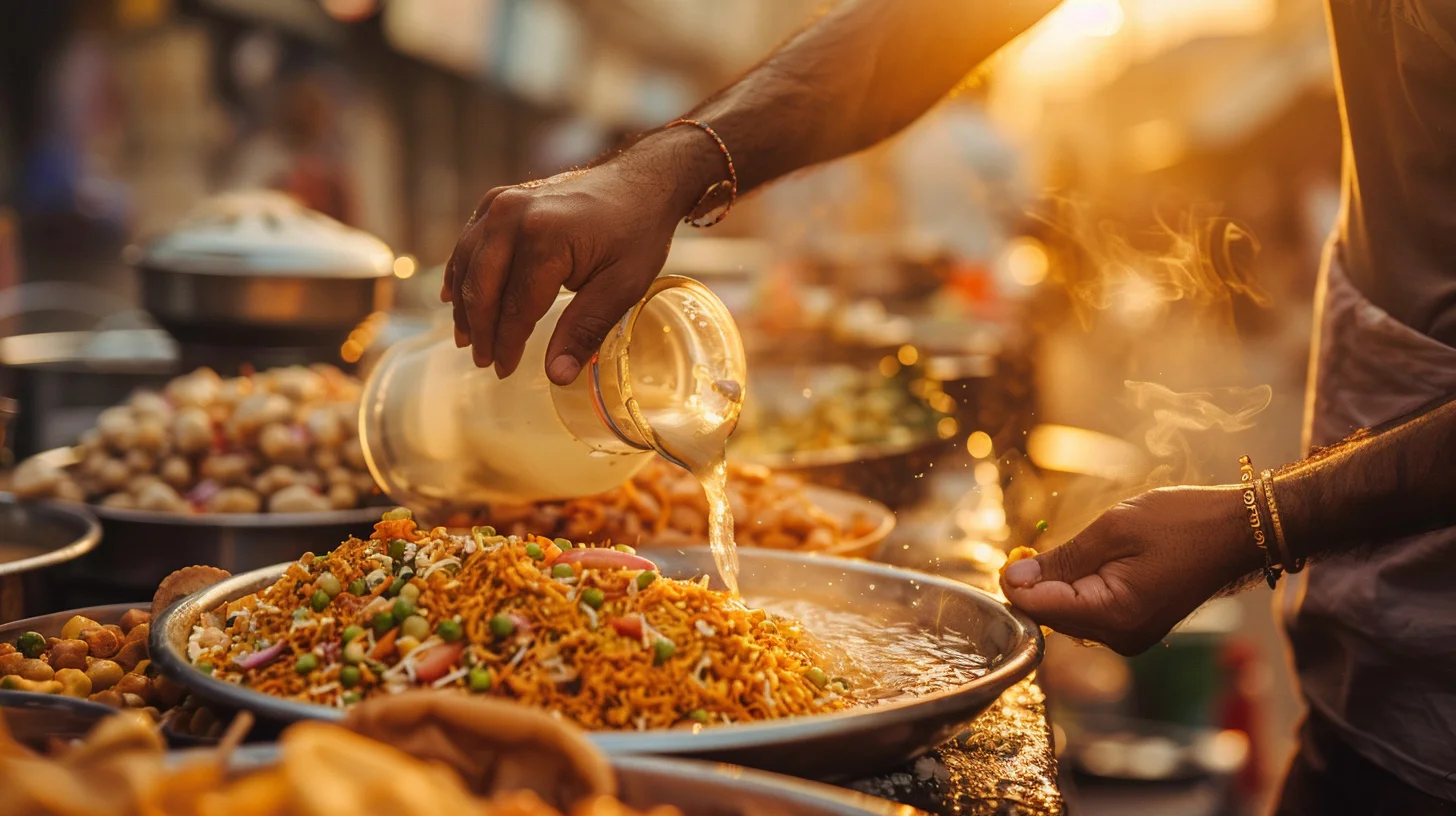
You can make pani puri water at home that tastes wonderful. You cannot make it taste exactly like a chaat cart.
Part of that is practical: a street vendor's water has been sitting in a big matka for hours, absorbing the clay's faint mineral earthiness and settling into a flavor depth no 30-minute home rest will match. Part of it is technique: vendors grind their mint and chili fresh on a sil batta (flat stone grinder) rather than a blender, which doesn't heat-damage the herbs the way a motorized blade does. And part of it is seasoning: home cooks almost universally under-salt the water compared to street stalls, where a Mumbai chaat-wallah thinks of black salt by the tablespoon.
There's also cultural theater. The transaction is fast — vendor hands you a puri dunked, you eat it in one bite, he's already holding out the next one. Some stalls will keep feeding you until you say "bas" (stop). The rhythm of it changes how the flavors register. A single puri on a plate at home is never the same dish.
Note
Troubleshooting pani puri water at home
Problem: The water tastes flat
You're probably under-seasoning. Black salt (kala namak) is the single biggest dial — it's what makes chaat taste like chaat. Start with 1 teaspoon per 4 cups of water and adjust up. Also ensure your tamarind is actually tangy; old tamarind pulp loses acidity.
Problem: The water is cloudy
Cloudiness comes from over-blending, which emulsifies chlorophyll from the mint and coriander. Fix: blend just until the herbs are broken down (10-15 seconds), then strain aggressively through a fine-mesh sieve or muslin cloth. You want a clear liquid tinted green, not a smoothie.
Problem: The water is too spicy
Cut with plain cold water and a touch more jaggery or sugar to rebalance. A splash of tamarind pulp also tames raw chili heat. Don't try to remove chili — you'll lose structure. Always dilute.
Problem: The water loses punch after a few hours
Mint oxidizes. For best results, prepare a concentrated masala paste (mint, coriander, ginger, chili blended with minimal water) and store that in the fridge for up to 3 days. Dilute with cold water, tamarind, and salt just before serving.
Make-ahead and storage
The masala paste keeps 3 days refrigerated. Fully diluted water is best within 24 hours. Never freeze — the texture breaks and the herbs go off. For a party, freeze ice cubes made from the water itself so dilution doesn't weaken the flavor as it melts.
What to eat with your pani puri water
Pani puri itself is the obvious answer, but the water has range. A single shot of chilled pani is one of India's great pre-meal palate cleansers. It also makes an excellent base for cocktails — mint-tamarind vodka is a real thing at modern Indian restaurants — and works as a marinade for paneer tikka or chicken where you want fast depth without hours of prep.
Frequently asked questions
What is pani puri water made of?
Traditional pani puri water combines mint, coriander, tamarind, green chili, ginger, roasted cumin, black salt, and a souring agent (lemon or amchur). The exact balance varies by region — Mumbai style leans mint-forward and spicy, Delhi style balances khatta-meetha, and Banarasi style is heavier on tamarind and jaggery.
What is the difference between pani puri, gol gappa, and phuchka?
They are the same snack with regional names. Pani puri is the Mumbai/Maharashtrian name, gol gappa is the North Indian (Delhi, Punjab) name, and phuchka is the Bengali name. The shells, fillings, and water recipes differ subtly — phuchka typically has a mashed potato filling and tangier water, while Delhi gol gappas tend toward sweet-sour dual waters.
How do you make pani puri water at home?
Blend 1 cup fresh mint, 1/2 cup coriander, 2 green chilies, 1-inch ginger, 1 tablespoon roasted cumin powder, and 2 tablespoons tamarind pulp with 4 cups cold water. Strain, then season with black salt, chaat masala, and lemon juice to taste. Chill at least 30 minutes before serving.
Why is pani puri water green?
The green color comes from fresh mint and coriander leaves blended into the water. Mumbai-style teekha pani is the most vibrantly green because it uses more mint relative to tamarind.
How long does pani puri water last?
Homemade pani puri water keeps 2-3 days refrigerated in a sealed glass container. Flavor is sharpest within the first 24 hours.
Explore more
Looking to round out a chaat spread? Browse our full street food collection or beverage recipes for more cooling drinks to serve alongside. For a deeper look at India's chaat tradition, see our guide on the best Indian curry recipes to pair with your snacks, or learn why spice blooming matters so much in the cumin used here.
Have a regional pani puri water recipe your family swears by? Submit your recipe and join the community.