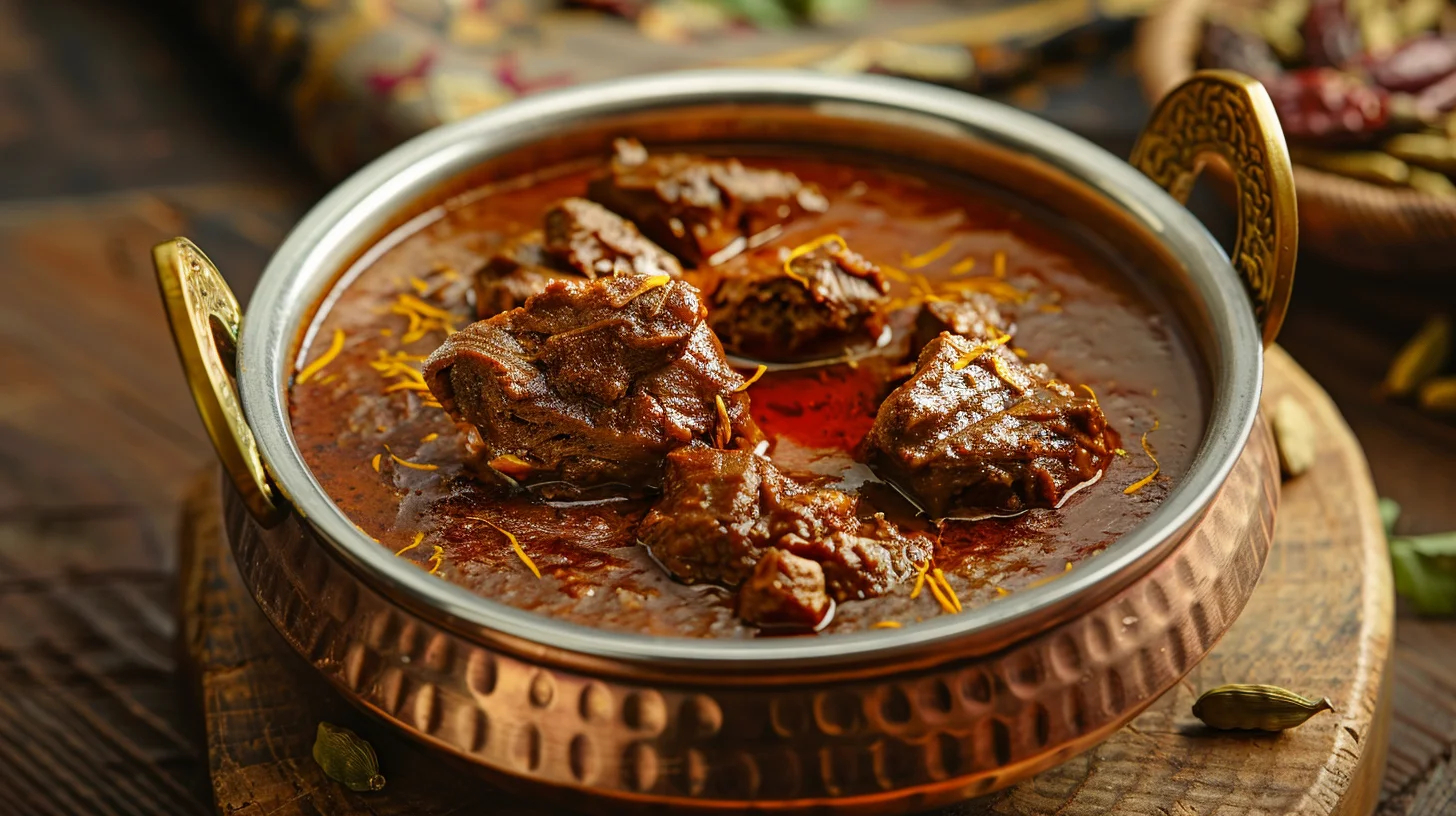
Kashmiri Rogan Josh: The Complete Guide to Kashmir's Iconic Lamb Curry
 MasalaBear Team
Real Kashmiri rogan josh isn't what most restaurants serve. A deep guide to the two Kashmiri traditions, why it's red without being spicy, and how to cook it properly.
What most people call rogan josh isn't rogan josh.
If the lamb curry in front of you is orange-brown, tomato-heavy, and burns on the back of your tongue, you're eating a British Indian restaurant dish that borrowed a Kashmiri name. The real thing is darker, deeper, cooler on the palate — a curry whose color comes from a specific root, whose aroma comes from fennel rather than garam masala, and whose heat barely registers.
Kashmiri rogan josh is one of the most widely adapted and most widely misunderstood dishes in Indian cuisine. This is a guide to what it actually is.
Where rogan josh comes from
The name is Persian. Rogan means oil or fat; josh (or jhosh) means heat or passion — together, literally "hot oil" or "red oil." It refers to the sheen of deep-red fat that rises to the surface during slow cooking, which is the visual signature of a properly-made curry.
The dish itself came to Kashmir with Mughal cooks during the 15th and 16th centuries, arriving from the Persian culinary tradition and adapting to Kashmiri ingredients: the local Kashmiri mirch (chili), ratan jot (alkanet root), and yogurt replaced the Persian techniques and produced something new. Over the next several centuries, two distinct Kashmiri traditions emerged — one in the Pandit kitchens of the valley, another in the Muslim Wazwan kitchens — and rogan josh sits at the intersection of both.
It is not a North Indian dish. It is not a Mughlai dish. It is specifically, identifiably Kashmiri, and the ingredients that make it authentic don't appear in most Indian restaurant pantries outside the region.
The two traditions: Kashmiri Pandit vs Kashmiri Muslim
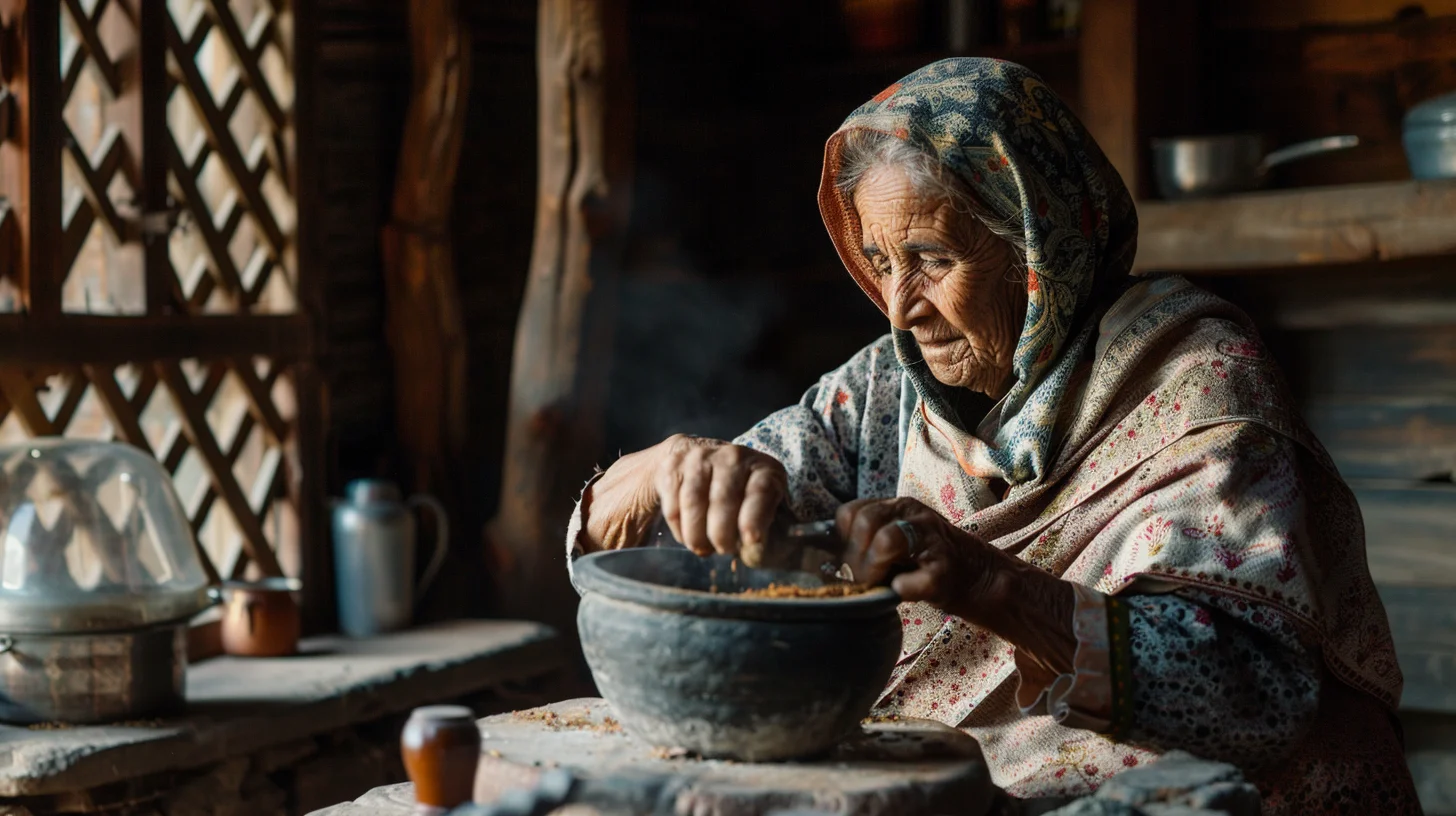
Within Kashmir, there are two major culinary traditions that each make rogan josh differently. Both are authentic. Both have been cooked the same way for centuries. Neither is more "real" than the other.
Kashmiri Pandit rogan josh
Kashmiri Pandit cuisine traditionally avoids onion and garlic — an older Brahmin dietary convention. The base of Pandit rogan josh is instead:
- Asafoetida (hing) for the savory umami depth that onion-garlic would normally provide
- Fennel powder (saunf) for sweetness and aromatic structure
- Ground dry ginger (sonth) rather than fresh ginger-garlic paste
- Yogurt as the primary gravy medium, with the meat slow-braised in it
- Kashmiri mirch for color
- Ratan jot for the signature red oil
The result is lighter-bodied, yogurt-forward, fennel-dominant. It's elegant, almost floral, with a clean aftertaste. Pandit rogan josh has an aromatic complexity that the Muslim version doesn't try for — and it doesn't aim for the heavy richness either.
Kashmiri Muslim rogan josh (Wazwan tradition)
The Muslim Wazwan tradition of the Kashmir valley makes rogan josh as one of the 36 courses of the formal feast. The base here is:
- Onion and garlic paste cooked slowly in oil until deeply browned
- Whole garam masala (cinnamon, cloves, green and black cardamom, bay leaves)
- Kashmiri mirch for color
- Ratan jot for the red oil (often bloomed in oil first and strained)
- More oil / ghee than the Pandit version — the "rogan" in the name refers to this layer of fat
- Typically no yogurt (some variations use a small amount; many don't)
The result is heavier, richer, more deeply spiced. It has a restaurant-level complexity and is the version most closely replicated (and distorted) by North Indian restaurants.
What they share
Both traditions use goat or lamb (not beef — Kashmir has historically cooked primarily with sheep and goat), both rely on ratan jot and Kashmiri chili for the signature color, both are slow-cooked for 90 minutes to several hours, and both emphasize the visible separation of red oil at the end of cooking.
Why it's red (but not spicy)
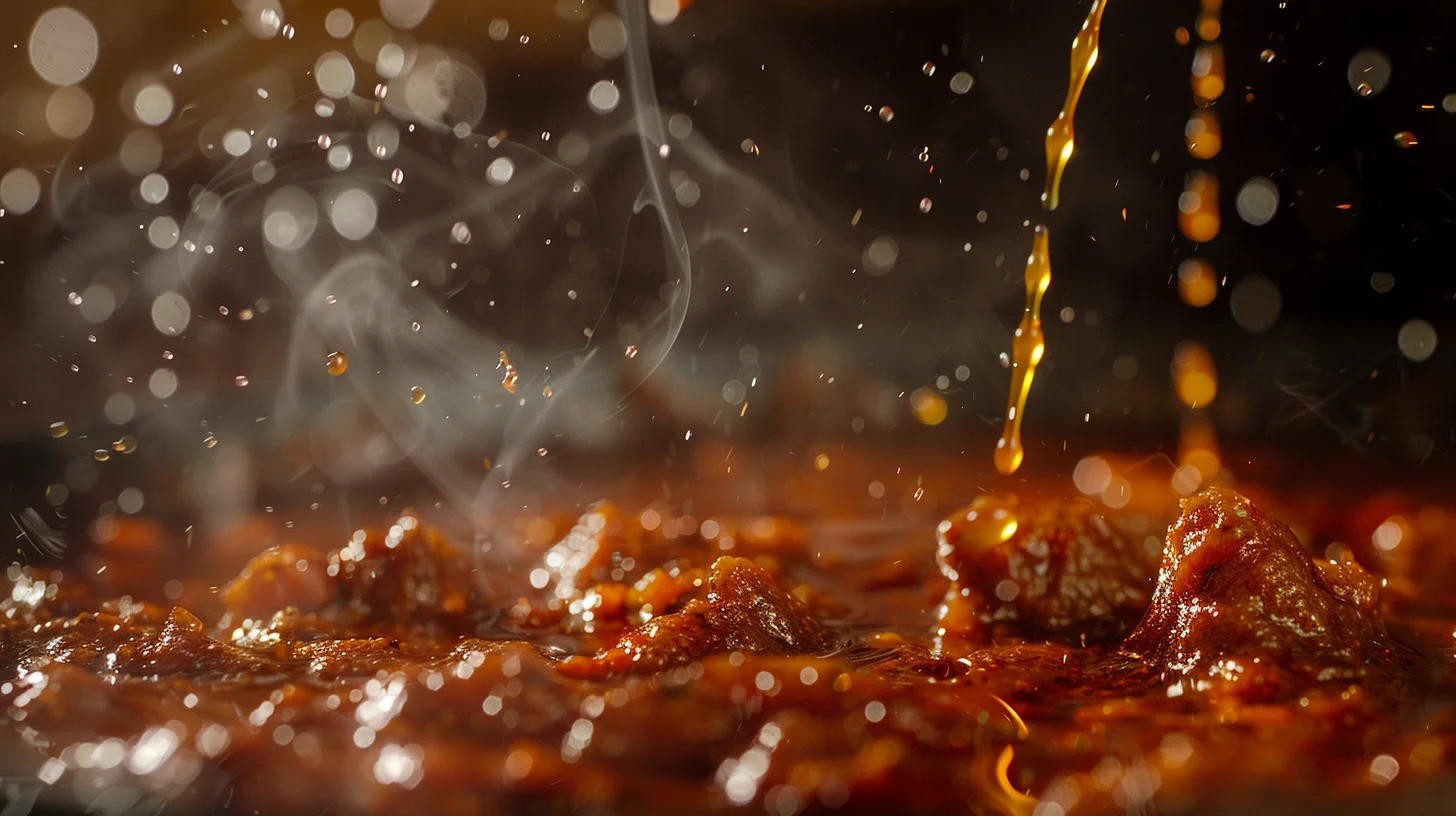
This is the most important thing to understand about Kashmiri rogan josh, and the thing restaurant versions routinely get wrong.
The red color comes from three sources — none of them spicy:
1. Kashmiri mirch
Kashmiri red chili (grown in Jammu and Kashmir) is prized for a very specific ratio: extremely high color pigment, extremely low capsaicin (the chemical that makes chili hot). On a heat scale, Kashmiri mirch sits around 1,000-2,000 Scoville units — compare to a standard Indian red chili at 30,000-50,000 and a bhut jolokia at over a million.
A good cook can use a heaping tablespoon of Kashmiri chili powder and produce a deeply red curry that is barely warm. If your rogan josh tastes hot, you're probably using the wrong chili.
2. Ratan jot (alkanet root)
This is the secret. Ratan jot is an old-world root (also called alkanet or Alkanna tinctoria) that releases a natural deep-red dye when bloomed in hot oil for a few seconds. Traditional Kashmiri cooks heat oil, drop in a 1-inch piece of ratan jot, watch the oil turn ruby red in seconds, then strain the root out and use the colored oil.
Ratan jot has almost no flavor of its own. It is pure color. It's also what gives authentic rogan josh its signature shade — the deep, slightly bluish ruby-red that's distinct from the orange-red of paprika or tomato. Without ratan jot, you can get close to the color with enough Kashmiri chili, but you can't quite hit the exact tone.
3. Mawal (cockscomb flower)
Traditional Kashmiri cooking sometimes uses dried mawal (Celosia cristata) petals for color — soaked, strained, and the colored water added to the curry. It's rarer in home cooking now, more common in restaurant-style Wazwan preparation. Mawal gives a slightly pinker-red tone than ratan jot alone.
Heat comes from somewhere else entirely
What warmth there is in rogan josh comes from ginger (both fresh and dried), black cardamom, cloves, and the slow-cooked meat itself. These give a mellow, enveloping warmth — pleasant, not aggressive. The dish is warming the way a good stew is warming, not the way a Thai curry is hot.
Wazwan: the feast that frames the dish
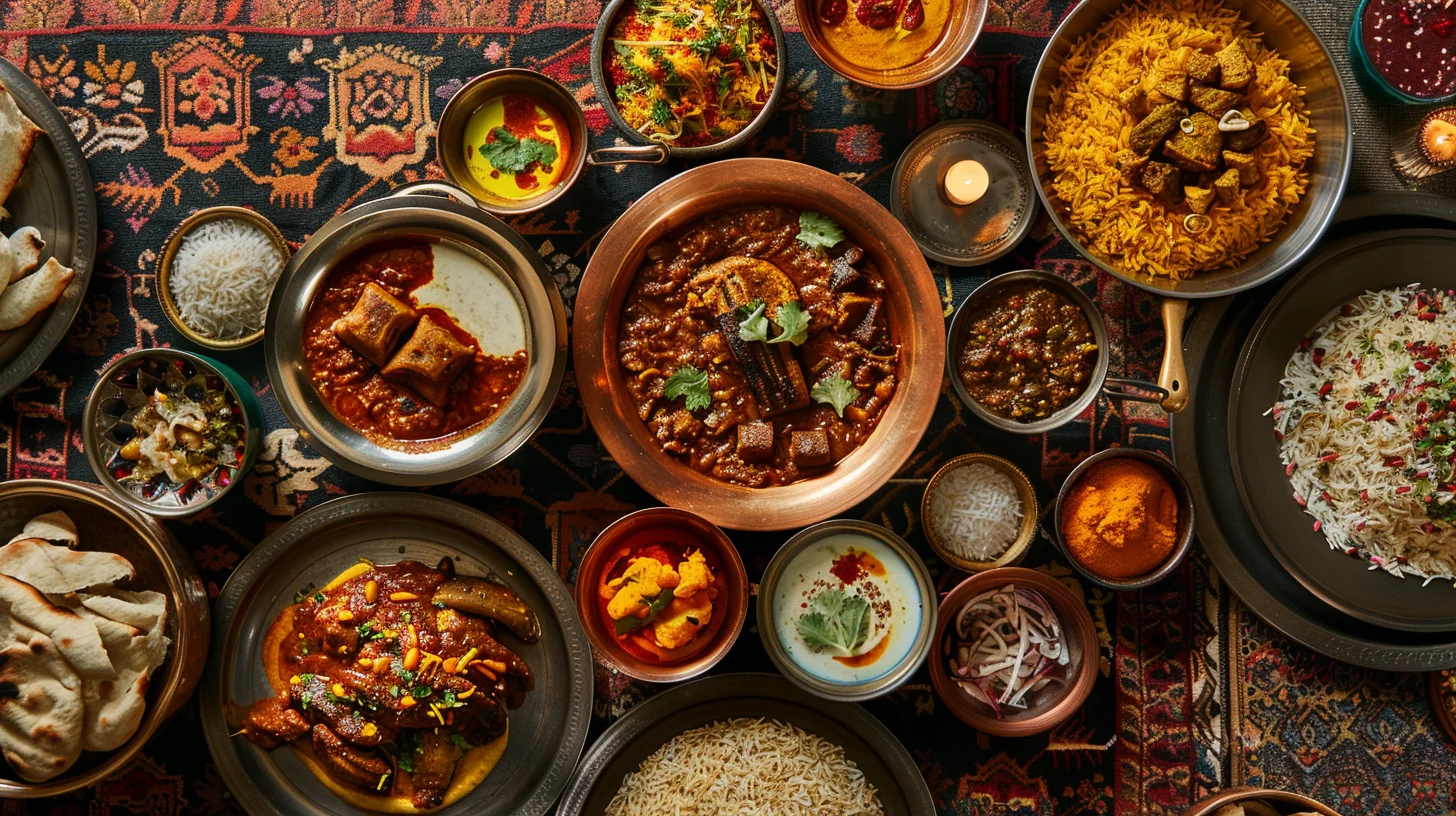
Rogan josh in Kashmir is almost never served by itself. It sits within the Wazwan — a ceremonial multi-course feast that defines Kashmiri Muslim celebration dining.
Wazwan is traditionally 36 courses (though modern versions often trim to 7 to 15), centered around mutton. Four diners share a single large copper plate called a trami, with small portions of each course arranged around it. Rogan josh is one of the central courses, alongside:
- Tabak maaz — crispy fried lamb ribs
- Yakhni — a yogurt-based white mutton curry
- Gushtaba — oversized meatballs in a creamy white gravy (the ceremonial closer)
- Rista — smaller meatballs in a rich red gravy
- Aab gosht — mutton in milk-based gravy
- Saffron-scented rice (often basmati with a crimson thread of saffron)
Wazwan is cooked by a guild of specialist chefs called wazas, who inherit the tradition father-to-son. A single Wazwan meal for a wedding can take 6-8 hours to cook and features multiple whole goats worth of meat across the courses.
If you ever get the chance to eat a real Wazwan in Srinagar, do it. Rogan josh tastes different when it's one course in a larger narrative — richer, more specific, more like the regional dish it was designed to be.
Common mistakes when cooking rogan josh at home
Mistake: Using garam masala
Traditional Kashmiri rogan josh does not use the typical North Indian garam masala blend. Kashmiri spicing uses whole spices — cinnamon, cloves, green and black cardamom, bay leaves — bloomed in oil rather than a pre-ground masala powder added at the end. Pre-mixed garam masala tastes "wrong" in rogan josh because the proportions are off and the flavors overwhelm the fennel-chili-ginger balance.
Mistake: Using a hot chili
If you can't find Kashmiri mirch, use smoked paprika (Hungarian or Spanish) cut with a small pinch of cayenne for a hint of warmth. Regular Indian red chili or cayenne alone will make the curry too hot and miss the color target.
Mistake: Adding tomato
Tomato is a restaurant-style addition, not a traditional one. It makes the color orange-red instead of ruby-red and introduces a tang that doesn't belong. Classic Kashmiri rogan josh has no tomato.
Mistake: Rushing the oil separation
The signature "rogan" — the red oil rising to the surface — only happens with patient slow cooking. If you pressure-cook the whole dish, you'll get tender meat but a cloudy, unseparated gravy. The oil separation requires at least 45 minutes of uncovered simmering, during which the water evaporates and the fat rises.
Mistake: Using fresh ginger-garlic paste (for Pandit version)
If you're cooking a Pandit-style rogan josh, substituting fresh ginger-garlic paste for dried ginger and hing is a common shortcut that changes the dish. Dried ginger (sonth) has a completely different flavor profile from fresh — sharper, drier, more medicinal. Stick to the traditional ingredient if you want the traditional taste.
How to serve rogan josh
Traditional pairings:
- Basmati rice (plain or with a saffron thread) — the most common everyday pairing
- Sheermal — a sweet saffron-flavored Kashmiri flatbread
- Naan or roti — standard but not specifically Kashmiri
- A simple cucumber raita to cut the richness
- Kahwa (Kashmiri green tea with saffron, cardamom, and almonds) to close the meal
Rogan josh rests well. It's actually better the next day — the spices meld, the oil separates more cleanly, and the meat becomes more tender as it sits in the gravy. For a dinner party, cook it the day before and gently reheat.
 Medium
Featured Recipe
Fiery Kashmiri Rogan Josh (Pressure Cooker Style)
weeknight pressure cooker rogan josh. sear the meat first thats the trick
Frequently asked questions
What is rogan josh?
Rogan josh is a slow-cooked Kashmiri lamb or mutton curry whose name translates to "red oil" — referring to the pool of deep-red fat that rises to the surface during cooking. It's a signature of Kashmiri cuisine and a centerpiece of the Wazwan feast tradition.
Why is rogan josh red?
The red comes from Kashmiri red chili (mild, color-rich), ratan jot (alkanet root that releases natural red dye in hot oil), and sometimes mawal (cockscomb flower). The color is from pigments, not heat.
Is rogan josh spicy?
Authentic Kashmiri rogan josh is not spicy. Kashmiri mirch is prized for color and mildness rather than heat. Warmth comes from ginger, fennel, and whole garam masala, not from chili heat.
What is the difference between rogan josh and rogan gosht?
They're the same dish with regional naming variations. "Rogan josh" is more common in Kashmir and English-language cookbooks; "rogan gosht" is a Punjabi/Urdu rendering. Both refer to the red slow-cooked lamb curry.
What is ratan jot?
Ratan jot is alkanet root, a natural food coloring that releases a deep ruby-red pigment when bloomed in hot oil. It has no significant flavor and is used purely for color. Traditional Kashmiri rogan josh depends on it for the authentic red tone.
Explore more
Ready to cook the whole Kashmiri table? Our main course recipes and dal and curry collection include more regional meat dishes worth exploring. For context on how rogan josh fits within India's broader curry tradition, see our roundup of the best Indian curry recipes, which places it alongside butter chicken, vindaloo, and Chettinad pepper chicken. And if you're curious why spice order matters so much in Kashmiri cooking, our guide to the science of spice blooming explains the technique that makes ratan jot work at all.
Cook a family rogan josh recipe — especially a Pandit-tradition version — we'd love to feature it. Submit your recipe to share with the community.